Jump to HeaderJump to Main ContentJump to Footer
Michigan State University
School of Criminal Justice
  • Apply
  • Give
  • Directory
  • Contact Us

College of Social Science

School of Criminal Justice

  • Academics
    • Overview
    • Majors, Degrees and Programs
    • Undergraduate
    • Graduate
    • Advising
    • Scholarships
    • Careers & Internships
    • Student Resources
    hero-cold-case

    Cold Case Unit

    Learn More
  • |
  • Research
    • Overview
    • G.R.E.A.T. Follow-up Study
    • Research Labs
    • Police Research Lab
    • Funded Projects
    • Recent Publications
    2023-A-CAPP-6059

    Research Labs in Criminal Justice

    Learn More
  • |
  • Community
    • Overview
    • MSU Center for Cybercrime Investigation and Training
    • Police Staffing Observatory (PSO)
    • Michigan Justice Statistics Center
    • First Line Supervision Course
    • Interdisciplinary Conference on Cybercrime
    • School of Staff and Command
    cyber-center-logo-webfile

    MSU Center for Cybercrime Investigation and Training

    Learn More
  • |
  • News
  • |
  • Events
  • |
  • Alumni
    • Overview
    • Giving
    • Update Your Information
    • Store
    • Public Safety Memorial
    • Tournament of Friendship
    • Wall of Fame
    hoodie

    Shop Criminal Justice Merchandise

    View Store
  • |
  • About
    • Overview
    • Directory
    • Strategic Plan
    • Store
    • Employee Information
    • Contact Us
    CJ_Cybercrime_training_II-8487

    Meet the faculty & staff in the School of Criminal Justice

    View Directory
School of Criminal Justice

College of Social Science

  • Academics
  • Research
  • Community
  • News
  • Events
  • Alumni
  • About

< Academics

  • Overview
  • Majors, Degrees and Programs
  • Undergraduate
  • Graduate
  • Advising
  • Scholarships
  • Careers & Internships
  • Student Resources
hero-cold-case

Cold Case Unit

Learn More

< Research

  • Overview
  • G.R.E.A.T. Follow-up Study
  • Research Labs
  • Police Research Lab
  • Funded Projects
  • Recent Publications
2023-A-CAPP-6059

Research Labs in Criminal Justice

Learn More

< Community

  • Overview
  • MSU Center for Cybercrime Investigation and Training
  • Police Staffing Observatory (PSO)
  • Michigan Justice Statistics Center
  • First Line Supervision Course
  • Interdisciplinary Conference on Cybercrime
  • School of Staff and Command
cyber-center-logo-webfile

MSU Center for Cybercrime Investigation and Training

Learn More

< News

< Events

< Alumni

  • Overview
  • Giving
  • Update Your Information
  • Store
  • Public Safety Memorial
  • Tournament of Friendship
  • Wall of Fame
hoodie

Shop Criminal Justice Merchandise

View Store

< About

  • Overview
  • Directory
  • Strategic Plan
  • Store
  • Employee Information
  • Contact Us
CJ_Cybercrime_training_II-8487

Meet the faculty & staff in the School of Criminal Justice

View Directory
  • Apply
  • Give
  • Directory
  • Contact Us

Academics

  • Majors, Degrees & Programs
  • Advising
  • Scholarships
  • Careers & Internships
  • Study Abroad & Study Away
  • Get Involved
  • Student Resources
  • Honors Option
  • Cold Case Unit
  • Undergraduate FAQ
  • Graduate FAQ

NEWS & EVENTS

  • News
  • Events

About

  • Directory
  • Strategic Plan
  • Current Employee Information
  • Store
  • Contact

Alumni

  • Giving
  • Wall of Fame
  • Public Safety Memorial
  • Update Your Information
  • Tournament of Friendship

Community

  • MSU Center for Cybercrime Investigation and Training
  • School of Staff and Command
  • First Line Supervision Course
  • Michigan Justice Statistics Center
  • Police Staffing Observatory
  • Interdisciplinary Conference on Cybercrime

Research

  • G.R.E.A.T. Follow-up Study
  • Police Research Lab
  • Research Labs
  • Funded Projects
  • Recent Publications

Contact us

cj@msu.edu

Address

Baker Hall, Rm #557 655 Auditorium Rd East Lansing, MI 48824

Follow Us

  • Visit our Facebook page
  • Visit our page on X
  • Visit our Instagram page
  • Visit our LinkedIn page
  • Visit our YouTube page

If you're having accessibility issues, please let us know.

Know MoreTransparency Reporting: Budget & Salary/Compensation
  • Contact Information|
  • Site Map|
  • Privacy Statement|
  • Site Accessibility|
  • Call MSU: (517) 355-1855|
  • Visit: msu.edu|
  • Notice of Nondiscrimination|

SPARTANS WILL|© Michigan State University|

Aug. 13, 2026

College of Social Science Access Champion: Dr. Cooper Maher

Written by Emily Jodway Patyna

This July, the College of Social Science celebrates Disability Independence Day and recognizes members of the Michigan State community working to advance equity, belonging and independence among the disabled community. Our Access Champion for July, Cooper Maher, is an Assistant Professor in the School of Criminal Justice who engages in research examining the association between disabilities—particularly intellectual and developmental disabilities (IDD)—and victimization risk, consequences, and reporting, as well as how individuals with intellectual and developmental disabilities experience the criminal justice system.
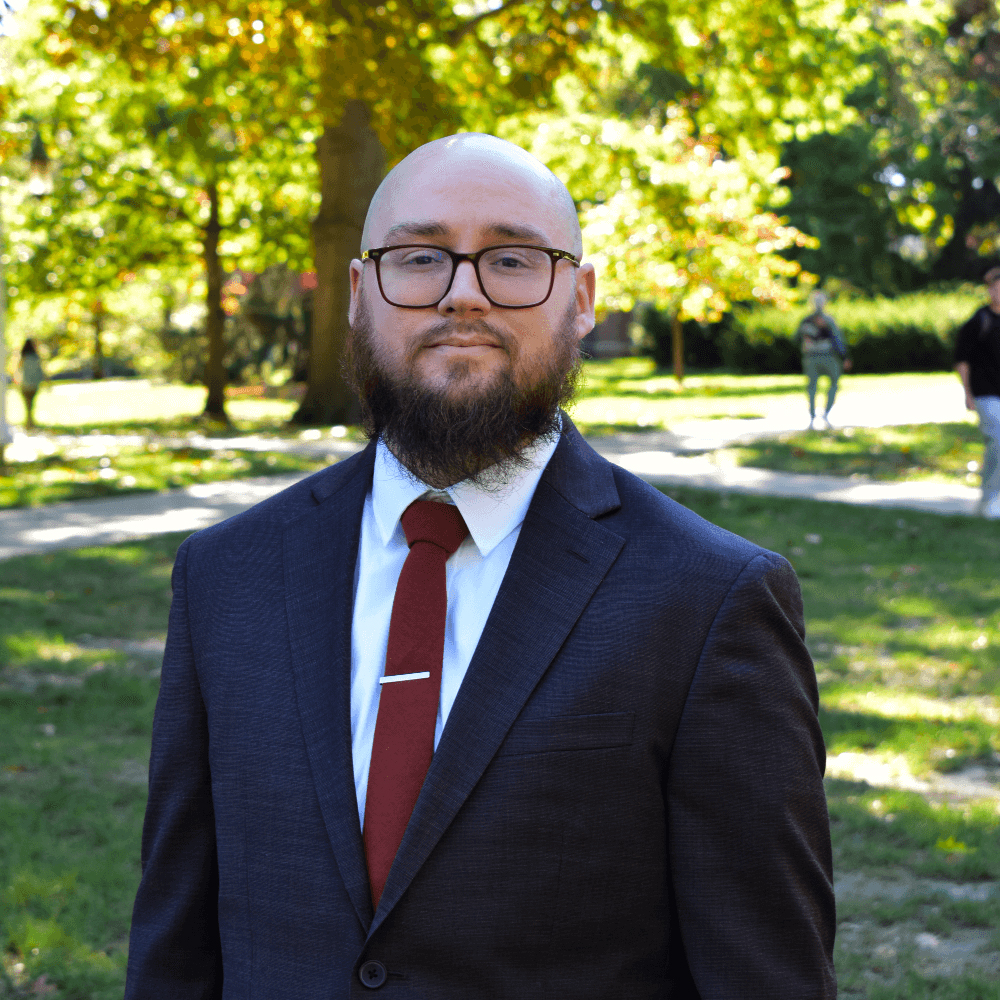
Headshot of Dr. Cooper Maher in front of a nature background.

Maher arrived at Michigan State for his first year of teaching in Fall 2025, having recently earned his PhD in Criminal Justice from University of Cincinnati. He graduated with undergraduate and graduate degrees from Weber State. Serving in the army after high school greatly influenced his interest in and decision to study criminal justice.

Maher’s research into cybercrime and disability began at Cincinnati when he worked on a project with his graduate advisor, Dr. Brittany Hayes, examining communication barriers to help-seeking among victims of violence against women- particularly those with intellectual or developmental disabilities. She helped him bridge his own interests in cybercrime with working among the disabled population.

“That’s really where my research lives now- trying to understand how having a cognitive or intellectual disability might influence one’s risk of being targeted for certain forms of cyber crimes, like romance fraud or identity theft,” Maher said.

Maher was drawn to Michigan State after seeing its preexisting foundation of cybercrime research and the ways in which he could incorporate this into his own research into the same areas, but through the lens of disability. “An under-evaluated component of cybercrime research is the role that disability plays in shaping individuals’ risks,” he explained.

By further researching the unique risk factors that exist among this group, Maher explains, we can also discover ways to better tailor our informational resources and protective measures surrounding fraud prevention. One of the biggest first steps is to use more simplified, inclusive language in these materials and remove the barrier to access and understanding. The benefits of this will ripple beyond just the disabled community.

“Fraud is a global issue, and the beauty of that kind of approach and prioritizing accessibility is that it helps everyone in the end,” he said. “It’s the idea that a rising tide lifts all boats, and that’s really my hope for this research.”

Maher is looking forward to conducting more research that involves collaboration with both his students and the greater disabled community. In addition to consulting with these individuals when first developing research projects, he also circles back after the fact and shares his findings in easy to read formats. This portion is especially important to the community, who often rally around the phrase, “Nothing about us without us.”

“We want them to be stakeholders and equal partners in developing this research,” Maher said.

July is all about celebrating the signing of the Americans with Disabilities Act, which Maher explains is an important first step, but not the final step, towards increasing protections for this group. “What I hope to do with my research of disability and cyber crime is to illuminate what some of those next steps might be, to help better protect and serve folks with disabilities, to mitigate risk of cyber victimization, and to better respond to it from the criminal justice system side as well.”

Honorees’ views are their own and do not necessarily reflect those of the College of Social Science or School of Criminal Justice.