The School of Criminal Justice annually seeks and accepts nominations for the School of Criminal Justice Wall of Fame Award. Nominations are due on or before December 31st.
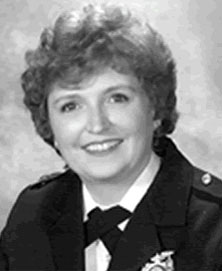
Dr. Holtfreter is a Professor in the School of Criminology & Criminal Justice at Arizona State University and has received our Distinguished Alumni Award. Dr. Holtfreter is an internationally recognized expert in criminological theory, white-collar crime, and victimization. Her research has been funded by the United States Department of Health and Human Services, the National Institute of Justice, and the AARP, among other sources.
Distinguished Faculty Inductee
Dr. Ed McGarrell
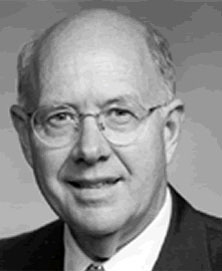
Dr. Ed McGarrell is an Emeritus Professor in the School of Criminal Justice at Michigan State University and has received our Distinguished Faculty Award. Dr. McGarrell’s primary research interest is in communities and crime and the development of evidence-based strategies for violence reduction. He also founded Project Safe Neighborhoods, a researcher-practitioner partnership in communities across the United States that has been credit with saving countless lives.
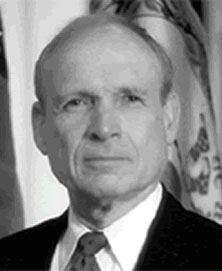
Dr. Ed Banks has had an extensive career in Juvenile and Criminal Justice. Earning his bachelor’s and graduate degrees from MSU, laid the groundwork for Dr. Banks to pursue a variety of roles that shaped the justice system at the State and Federal Level. Since 2008, Dr. Banks has worked for the U.S. Department of Justice (DOJ) where he has served as a Senior Policy Advisor, Senior Advisor to the Director of the National Institute of Justice, and Director of the Policy Analysis Unit at DOJ’s Office of Legal Policy. Dr. Banks attributes his success to the mentorship received at MSU and advises students to passionately champion a cause within the Criminal Justice System.
Hermina Kramp
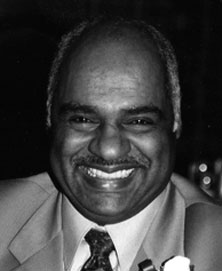
Hermina Kramp, born in Detroit to German immigrants from Romania, was deeply influenced by her upbringing in a culturally diverse city. Inspired to serve the public, her path in law enforcement was sparked during a school Career Day. Hermina pursued a Criminal Justice degree at Michigan State University, leading to a vital role with the MSU Police Department. She later joined the Michigan Law Enforcement Officer Training Council (MCOLES) in 1987, contributing significantly as a curriculum developer and eventually serving as Deputy Executive Director. Now retired, Hermina is an avid traveler and bird watcher, continually advocating for open-mindedness and the value of diverse perspectives.
Dr. Justin Patchin
Dr. Justin Patchin is a Professor at the University of Wisconsin–Eau Claire. After completing his Bachelor's Degree in Criminal Justice at the University of Wisconsin-Superior, Dr. Patchin furthered his education at MSU where he earned a Master's Degree and Doctoral Degree in Criminal Justice with a focus on Juvenile Delinquency Prevention. Now at the University of Wisconsin–Eau Claire, Dr. Patchin balances teaching with research, drawing on his MSU experiences to inspire his students to value research and explore various educational pathways.
William Wilson
William Wilson was fascinated with detective tales and justice stories as a child. This led him to the University of Illinois as a pre-med student, but a discovery of Michigan State University's Criminal Justice course catalog shifted his focus to Forensic Science. William's career spanned multiple disciplines in Forensic Science, including roles as an Expert Witness and a Medicolegal Death Investigator in Cook County. He also contributed to educating future forensic experts as an Adjunct Professor and guest instructor. William's career, marked by continuous learning and self-improvement, exemplifies his advice to students: embrace learning and strive to be your best.
Distinguished Faculty Inductee
Dr. Mahesh Nalla
Dr. Mahesh Nalla had an early exposure to educational radio programs while growing up in rural India that ignited a passion for learning. A chance encounter with a Criminal Justice book redirected Dr. Nalla's career and prompted him to pursue a Masters and Doctorate in Criminal Justice at the State University of New York at Albany. His tenure at MSU has been marked by significant contributions, including pioneering the world's first Online Master's Program in Criminal Justice. His work extends globally, notably through the United Nations Firearms Violence Reduction Project and as Editor-in-Chief of the International Journal of Comparative & Applied Criminal Justice.
Ryan Okerstrom graduated with his Bachelors Degree in Criminal Justice from the MSU School of Criminal Justice. Throughout his career, he has worked in private security including a 22 year stint at Guardsmark. He now serves as VP of Operations at Huffmaster Crisis Response where he oversees the entire Protective Services Group portfolio in North America.
Tim Plancon
Tim Plancon graduated with a Bachelors Degree in Criminal Justice from the MSU School of Criminal Justice. After graduation, Tim joined the Ferndale Police Department before joining the United States DEA. Tim's career with the DEA took him around the world and culminated in his position as Chief of Operational Support before retiring in 2022.
Dr. Amanda Robinson
Professor Amanda Robinson earned her PhD from the School of Criminal Justice at MSU in 2001. She moved to Wales to take up an academic position in the School of Social Sciences at Cardiff University, where she is now Co-Director of the Security, Crime and Intelligence Innovation Institute. Amanda’s research focusses on how the police and criminal justice system, health and community-based agencies can best respond to violence against women, domestic abuse and sexual violence. Key findings from her research continue to significantly influence the policy and practice agenda in the UK, EU and Australasia. She was lead author of the Welsh Government's White Paper proposals that were passed into legislation as the Violence against Women, Domestic Abuse, and Sexual Violence (Wales) Act 2015. She was Editor of the British Journal of Criminology for ten years and has published more than 150 research articles and technical reports.
Distinguished Faculty Inductee
Dr. Chris Smith
Dr. Chris Smith is a Professor in the School of Criminal Justice at Michigan State University. Throughout his career, he has received several awards including MSU’s Teacher-Scholar Award (1997) and the most outstanding teacher in MSU’s College of Social Science (2012). He has gained national recognition for his extensive publication record that includes 50 books and more than 130 scholarly articles and book chapters.
Steve Cerutti graduated from the School of Criminal Justice in 1969. Cerutti served for twenty years in the U.S. Army, serving in various positions of increased responsibility around the world. He also served as the Chief of the Law Enforcement Division in the Pennsylvania Department of State. Cerutti was also the Intelligence Officer for the United States Attorney for the District of Maryland. He was once a police officer in Flint, and has been a licensed EMT, working in flight communications in Northern Michigan.
Steve K. Francis
Steve Francis is the Assistant Director for Global Trade Investigations Division with Homeland Security Investigations (HSI) and the Director of the National Intellectual Property Rights Coordination Center. Previously, Francis served as the Special Agent in Charge for HSI Detroit with an area of responsibility that included the states of Michigan and Ohio. He graduated from MSU’s School of Criminal Justice in 1997.
Scott Lindahl
Scott Lindahl is the Vice President of Corporate Services and Chief Security Officer for Kellogg Company. Lindahl has also served as the Corporate Loss Prevention and Business Continuity Planning Manager at Ace Hardware Corporation. He holds an undergraduate degree in Criminal Justice from MacMurray College and a master’s degree in Criminal Justice from MSU (1996). Lindahl also serves on MSU’s Center for Anti-Counterfeiting and Product Protection Advisory Board.
Michael J. Martin
Michael Martin is the CEO of Circadian Risk. Martin also provides direction and guidance for Aerospace & Defense security programs. He is also a licensed private investigator and is active in ASIS International, Michigan Council of Private Investigators and Crime Stoppers. Previously, Martin served as President of Allied Universal’s Canadian Operations. He holds a Bachelor of Science in Criminal Justice (1992) from Michigan State University and an MBA from the University of Michigan.
Distinguished Faculty Inductee
Dr. Merry Morash
Dr. Merry Morash is a professor in MSU’s School of Criminal Justice. Dr. Morash served as the director of the school for ten years (1990-2000). Her scholarly work has been cited over six thousand times and recognized by both the American Society of Criminology and the Academy of Criminal Justice Sciences. Dr. Morash chaired over 20 Dissertation Committees, and has authored or co-authored over 100 peer reviewed articles. She has won numerous awards for her work. Most recently, she received the MSU William J. Beal Outstanding Faculty Award.
Brooks graduated from Michigan State University in 1982 with a Bachelor of Arts Degree in Social Sciences with a dual major in Criminal Justice and Psychology. Brooks has been with the Harris County Juvenile Probation Department in Texas since 1983, and now serves as the Executive Director/Chief Juvenile Probation Officer. Most recently, Mr. Brooks has been instrumental in implementing the Juvenile Detention Alternatives Initiative.
Marlon Lynch
Lynch graduated with Bachelor of Science from the School of Criminal Justice at Michigan State University in 1995. Lynch also holds a master’s degree in Criminal Justice Administration from Boston University. He is currently the Senior Vice President of Campus Services and Safety at New York University. Lynch is a decorated public safety professional with over 22 years of experience in university settings.
Dr. John Smykla
John Smykla earned his PhD from Michigan State University’s School of Criminal Justice in 1977. Before retirement, he served as the Director & Professor at the School of Criminology and Criminal Justice at Florida Atlantic University. His research and teaching interests included corrections, offender reentry, police-worn body cameras, and high-impact learning.
Andra Bannister graduated from the Michigan State University School of Criminal Justice in December 1995. Following her graduation, Andra accepted a position at Wichita State University where she is currently a full professor and has served as Interim Director of the School of Criminal Justice.
Andra has spent most of her career developing and delivering training and technical assistance to law enforcement agencies. After receiving nearly eleven-million dollars in grants from the COPS Office of the Department of Justice, Andra was responsible for creating a branch of a nationwide law enforcement training network referred to as the Regional Community Policing Institute of Kansas (RCPI). Through the RCPI, Andra provided cutting-edge training to thousands of officers in a range of topics. Additionally, she was a presenter for a Department of Homeland Security national training program on Terrorism and Extremism.
Andra has also had the opportunity to travel around the world for business and educational purposes. As a doctoral student at Michigan State University, she was invited to provide training on computer crime to the Royal Thai Police in Pataya, Thailand.
Matt Heins
Matt Heins graduated from Michigan State University in May 1989 and began his career as a Cadet for the Jackson Police Department. He attended the Mid-Michigan Police Academy at Lansing Community College and was sworn in, as an officer, on December 23rd, 1989. His hard work paid off when he was selected as Chief of Police in 2007. In 2011, Matt was also placed in charge of the Fire Department; officially becoming the Director of Police and Fire Services – a position he remained in until his retirement in January, 2017.
Throughout his career, Matt seized upon various opportunities presented to him, including: attending the Northwestern School of Staff in Command; the FBI National Academy; becoming a member of the training curriculum committee for the Michigan Association of Chiefs of Police; presenting at many Police Executive Leadership Development programs through MSU; and sitting on the advisory board for the MSU School of Staff and Command. Matt was also appointed by the Governor to sit on the State Board of Community Corrections. In addition, Matt attended the Fire Academy and obtained his certification as a fire fighter.
After retiring, Matt was hired by Henry Ford Allegiance Hospital as their Security Manager. Recently, Matt began working for Meadowbrook Insurance Company as a Loss Control Consultant. Matt has also been a Board Trustee with Jackson College for 10 years.
Rod Kinghorn
Rod Kinghorn graduated from Michigan State University in 1974 with a Bachelor’s Degree in Criminal Justice. Upon graduation, Mr. Kinghorn began his 38-year career with General Motors working in a variety of Security positions, from front-line investigations up to global executive leadership. A majority of his career centered around conducting, managing or directing GM’s Security Investigations, including: frauds, thefts, major policy violations, loss of information, counterfeit automotive parts, health care fraud, threat of workplace violence, and other allegations of misconduct. In support of GM’s compliance obligations, Mr. Kinghorn led the implementation of GM’s global anonymous reporting and data based investigation management systems.
During his career with GM, Mr. Kinghorn served as the President of the Sierra Nevada Chapter of the American Society for Industrial Security (ASIS) and as Chairman for the Michigan Chapter of Infragard. He also collaborated with Dr. Judith Collins on the Michigan State University Identity Theft business partnership and with Dr. Jeremy Wilson as an inaugural member of the Industry Advisory Board for what is now known as the Anti-Counterfeiting and Product Protection Center (A-CAPP).
After retiring from GM, Rod worked as an Industry Fellow and an Outreach Specialist for the A-CAPP Center at Michigan State University.
Mark Alley joined Emergent BioSolutions in 2010 after a 24-year career with the Lansing Police Department in Lansing, Michigan. Mark is the Vice President of Global Protective Services and Public Affairs at Emergent and is responsible for corporate protective services, business continuity, and emergency management. In addition, Mark is responsible for internal and external communications and charitable giving at the Lansing site. As the Lansing chief of police for 10 years, he was responsible for more than 340 sworn and civilian personnel.
Throughout his career, Mark designed and implemented several innovative programs and initiatives. He was the catalyst behind the development and funding for the Helping Other People Excel (HOPE) Scholarship Program, which annually offers two free years of education at Lansing Community College to 500 at-risk 6th graders.
Mark graduated from Michigan State University with a Master’s degree in police administration in 1994. As an adjunct professor at Michigan State University from 1996 – 2016, he taught Community Policing, Police Administration and Investigation Procedure.
Joseph A. Schafer
Joseph A. Schafer is Professor and Chair of the Department of Criminology & Criminal Justice at Southern Illinois University Carbondale. His research focuses on policing, organizational change, leadership, police innovation, citizen perceptions of police, and the future of policing. He is a Past President of Police Futurists International, was a member of the PFI/FBI Futures Working Group, served as the Region 3 (Midwest) Trustee to the Executive Board of the Academy of Criminal Justice Sciences, and is a Commissioner for the Commission on Accreditation for Law Enforcement Agencies. Dr. Schafer has held appointments as a visiting scholar in the Behavioral Science Unit of the FBI Academy, the Centre of Excellence in Policing & Security at Griffith University in Brisbane, Australia, and the Australian Institute of Police Management. He is the author of four books and more than 50 research and policy articles appearing in various academic journals and policing periodicals.
Michelle LaJoye-Young
LaJoye-Young has worked for the Kent County Sheriff’s Department since 1989 in various roles within the Corrections, Patrol, Communications and Support Services Divisions. She has represented the Office of the Sheriff starting in 2010 as the Chief Deputy and as of June of 2015 is the Undersheriff of Kent County. She has worked diligently during her career to implement processes which make the administration of the Mission of the Sheriff more efficient. Some of those projects include a jail expansion project, Jail Management software implementation, electronic fingerprint and mug shot software implementation, Law Enforcement Mobile computing initiatives and Record Management Upgrades.
Throughout her career Undersheriff LaJoye-Young has represented the department in a number of broader initiatives to further the mission of public safety. Some of the more significant initiatives include State of Michigan, Criminal Justice Information Policy Board, Kent County Dispatch Authority TAC, Dispatch consolidation and Computer Aided Dispatch and 911 phone system implementation, FBI Criminal Justice Information Center Task Force on Mobile Computing and Identification Services Subcommittee. The Undersheriff has also been appointed by Governor Rick Snyder to the State of Michigan’s Public Safety Communications Interoperability Board.
LaJoye-Young Served in the Michigan Army National Guard and Army Reserves from 1985 through 1998 where she left as a Captain. She obtained her Bachelors in Criminal Justice from Michigan State University a Masters in Public Administration from Western Michigan University, MCOLES certification from Grand Rapids Community College and graduated from Northerwestern University School of Police Staff and Command.
Michelle is the proud mother of two sons, the oldest is attending Western Michigan University and the youngest is serving in the U. S. Airforce.
Kelvin Banks graduated from Michigan State University earning a Bachelor of Arts degree in Criminal Justice in 1999, followed by a Masters of Arts in Organizational Management from University of Phoenix in 2005, and a Masters in Social Work from Wayne State University in 2012.
He has been employed by the Third Judicial Circuit Court (Wayne County) since 2000, first as a Clinical Probation Officer/Clinical Case Manager, and as Director of Pretrial Services since 2013.
Kelvin founded The BEST Solutions LLC in 2006, a private-practice therapy corporation that specializes in therapy for couples, families, and youth. In 2013, he became an adjunct faculty member at Baker College in Auburn Hills, where he teaches courses in Family Dynamics, Criminal Justice, and Psychology. In addition, he served on the Detroit Service Learning Academy Board of Directors until 2013. The DSLA’s mission is to prepare students for academic success, lifelong learning, leadership and service to the community.
Eljay Bowron
Eljay Bowron graduated from Michigan State University earning a Bachelors of Science degree in Criminal Justice in 1973.
He was Director of the United States Secret Service (1993–1997), and was recognized by President Clinton with The Presidential Rank Award for his outstanding work. Eljay worked with the U.S. Secret Service (1974–1997), serving six different presidents. He has over 30 years of combined government and private sector experience, and has served as the Chief Security Officer for the Cleveland Clinic Foundation, the Executive Vice President and Chief Operating Officer of Vance International, and has held several senior executive positions in government.
Eljay has made significant contributions to domestic and international charitable causes, and has been an integral supporter of the Shinsky Orphanage, which serves abandoned, neglected, and abused children. In an effort to raise awareness and funds for the orphanage in 2009, he biked 2,000 miles from MSU’s Spartan Stadium to the Shinsky Orphanage in Matamoras, Mexico. He is heavily involved in foundation work and committed to aiding women and children victimized by human trafficking.
Eljay is currently serving as the Chairman of two affiliated international security firms – TorchStone Global & TorchStone Page.
David Carter
David Carter joined the faculty of the School of Criminal Justice in 1985 after earning his PhD in Criminal Justice Administration from Sam Houston State University. He is a professor and was instrumental in the foundation of the Law Enforcement Intelligence and Analysis Masters Program at Michigan State University. His expertise is in the areas of policing issues, violent crime control, law enforcement intelligence and counterterrorism.
A former Kansas City, Missouri police officer, Dr. Carter was Chairman of the Department of Criminal Justice at the University of Texas-Pan American in Edinburg, Texas for nine years prior to his appointment at Michigan State in 1985. He has served as a trainer, consultant, and advisor to many law enforcement agencies throughout the U.S., Europe and Asia.
He is the author or co-author of five books and numerous articles and monographs on policing issues and is a member of the Editorial Boards of various professional publications. Dr. Carter is also a member of the Justice Department’s Global Intelligence Working Group Training Committee and Privacy Committee.
Ritchie Davis
Ritchie Davis graduated from Michigan State University earning a Bachelors of Science degree in Criminal Justice in 1974, followed by a Masters of Public Administration from Western Michigan University.
Ritchie started his law enforcement career as an officer with the Ann Arbor Police Department and later the MSU Department of Public Safety. He then joined the Michigan State Police as a trooper and over the years moved upwards through the ranks. He was appointed Director of the Michigan State Police in 1987 and retired in 1991.
After his retirement, Ritchie joined the Michigan Truck Safety Commission as Project Director to implement and improve safety programs for professional truck drivers throughout Michigan. He earned high praises for his initiative and innovative safety programs. Ritchie was also during this time appointed by Governor Engler to the Michigan Gaming Control Board.
Paul Sparks
Paul was born and raised in Flint, Michigan, and holds an Associates degree in Police Administration from Charles S. Mott Community College, a Bachelors of Science degree (High Honors) in Criminal Justice from Michigan State University, and a Masters of Science degree in Criminal Justice from Michigan State University. Paul’s worldwide career in the military and federal law enforcement and intelligence communities has spanned approximately 40 years beginning as a college cadet with the Flint (Michigan) Police Department, a commissioned Officer in Michigan and New York National Guard Military Police units, a special agent in the U.S. Naval Criminal Investigative Service (NCIS), a staff operations officer in the Central Intelligence Agency, and assignments to the Office of the Director of National Intelligence, Office of The Under-Secretary of Defense, Federal Bureau of Investigation, National Joint Terrorism Task Forces Headquarters, Department of Homeland Security (DHS), and the Defense Intelligence Agency. Among his awards, Paul holds the NCIS Career Counterintelligence Award, a Meritorious Unit citation from the CIA, and two Unit citations from the Department of Defense.
Paul is recognized as a subject matter expert in counterintelligence/counterespionage, anti and counterterrorism, protective services and information sharing. Paul was one of the principles who developed the DHS concept of country-wide Fusion Centers for information sharing among first responders. For over 20 years Paul has been and continues to be a mentor for students from Michigan State, who are interested in careers in law enforcement and in the federal intelligence community. Paul is a member of the Michigan State University Alumni Association, and served 2008-2014 on the School of Criminal Justice Alumni Association Board of Directors as Board member, Vice-president and President.
Steven Bogdalek graduated from Michigan State University earning a Bachelor of Arts degree in Criminal Justice in 1986. Steven was a member of the Spartan football team as a starting offensive lineman and earned the 2nd Team All-Big Ten, 1st Team Academic All-Big Ten and the Potsy Ross Award for Outstanding Student/Athlete. Drafted by the Philadelphia Eagles, he played briefly in the NFL before launching his law enforcement career with the Bureau of Alcohol, Tobacco, Firearms and Explosives.
Steven was appointed as the Special Agent in Charge (SAC) of the Detroit Field Division in January 2014, returning to lead the division where he began his law enforcement career in 1987. While serving as a Federal Agent, Steven has been instrumental in the investigation, arrest and conviction of numerous violent street gangs and many violent drug and firearm trafficking organizations. He has also worked directly with the National Shooting Sports Foundation (NSSF) in developing and implementing the “Don’t Lie for the Other Guy” program that assists licensed firearms dealers in detecting and deterring the illegal purchase of firearms by straw purchasers.
Dr. Donna Hale
Donna Hale graduated from Michigan State University earning a Masters of Science degree in Criminal Justice in 1980 and a Ph.D. in Multidisciplinary Social Science in 1983. She taught at Georgia College, University of Baltimore and retired from Shippensburg University of Pennsylvania in 2010 to complete a Master of Divinity at Lancaster Theological Seminary.
After graduating, Donna continued her studies in Clinical Pastoral Education at Eastern Mennonite Seminary followed by a Chaplain Residency Program at Hershey Medical Center. She is ordained as a Community Chaplain at First United Church of Christ – Carlisle, Pennsylvania. Dr. Hale is Past-President of the Academy of Criminal Justice Sciences and received the ACJS Founder’s Award for Service to the Academy. She was Editor of the journal Women & Criminal Justice. Her presentations and publications are in the areas of policing, popular culture and crime and justice.
Dennis Halverson
Dennis Halverson graduated from Michigan State University earning a Bachelor of Arts degree in Criminal Justice in 1977. Dennis served as the Chief of Police for the City of Charlevoix from 1987 to 2005 retiring as the longest serving Chief of Police in the 100-year history of the city.
After his retirement from the City of Charlevoix as Chief, Dennis began working as the Safe Schools Coordinator for the Charlevoix-Emmet Intermediate School District, where he assists 11 regional school districts with critical incident policy development, training and drilling. Dennis is a member of the Michigan State University Alumni Association and the School of Criminal Justice Alumni Association Board of Directors. Dennis was the past President of the Michigan Association of Chiefs of Police and is a Life member of the International Association of Chiefs of Police and the Michigan Association of Chiefs of Police.0
William Nash
William Nash graduated from Michigan State University earning a Bachelor of Science degree in Police Administration and Public Safety in 1968 and a Masters of Science degree in Criminal Justice in 1972. His career in the criminal justice arena spanned 36 years beginning as a patrol officer with the Lansing Police Department, serving as a Chief of Police for the Dewitt Township Police Department and concluding with the Michigan Commission on Law Enforcement Standards, retiring as Deputy Director.
As a chief administrator at the Michigan Commission on Law Enforcement Standards, Bill was the principle researcher for the development and implementation of law enforcement officer selection and training standards for Michigan’s 23,000 certified peace officers. He also wrote the Law Enforcement Assistance Administration grant that resulted in the State of Michigan implementing the initial twelve Michigan Basic Police Training Academies. William Nash is a member of the Michigan State University Alumni Association and served on the School of Criminal Justice Alumni Association Board of Directors for two terms (2006-2013).
Richard Bernitt graduated from Police Administration at Michigan State University with a Bachelors of Science in 1943 and a Masters of Science in 1962. A dual sports star at Monroe High School in football and baseball, Richard went on to play baseball as a pitcher at Michigan State where he was a teammate of Jack Breslin. Following graduation he was commissioned as a Second Lieutenant in the U. S. Army and served until 1946.
Richard joined the staff of Michigan State University as a fire inspector and later rose to become the Director of Public Safety until his retirement in 1986. Following retirement, he then began a second career as a professional volunteer devoting himself primarily to helping the R.J. Scheffel Memorial Toy Project that annually gives toys during December to needy children and families.
Richard Bernitt was awarded the Jack Breslin Distinguished Staff Award in recognition not only of his professional contributions to Michigan State University, but additionally for his community service as well.
Robert Corso
Robert Corso graduated from the School of Criminal Justice at Michigan State University with a Bachelor of Science degree in 1976. Robert Corso serves as the Special Agent in Charge of the U.S. Department of Justice, Drug Enforcement Administration, Detroit Field Division. As a Special Agent in Charge, Robert is responsible for all federal drug enforcement operations, drug diversion and regulatory investigations, intelligence operations and administrative functions for the states of Michigan, Ohio and Kentucky. He has over 30 years of law enforcement experience, having served as a police officer with the Pontiac, Michigan Police Department where he served as a uniformed patrolman and the Grand Rapids Police Department where he served as a patrol officer/paramedic, swat officer, and as a member of an undercover team that focused on high crime prior to his federal service.
Robert is a member of the International Chiefs of Police, the Michigan Association of Chiefs of Police and a Lifetime member of the California Narcotic Officers Association.
John Donovan
John Donovan graduated from Police Administration at Michigan State University with a Bachelor of Science degree in 1959. John has dedicated his career to law enforcement serving as a Public Safety Officer and Civil Defense Coordinator for the Oak Park Department of Public Safety (Michigan), as Chief for the City of Troy Police Department (Michigan) and as an Assistant Professor in Law Enforcement at Oakland Community College (Michigan). He served as Chief of Police for the City of Troy with integrity and honesty while working with the community and the officers under his command.
John Donovan is a member of the School of Criminal Justice Alumni Association Board of Directors, Michigan State University Alumni Association, past-president of the Troy Police Officers Association, Troy Police Command Officers Association, Oakland County Chiefs of Police Association, Michigan Association of Chiefs of Police and International Association of Chiefs of Police.
Daniel Heyns
Daniel Heyns graduated from the School of Criminal Justice at Michigan State University with a Masters of Science in 1977 and is a graduate of the FBI National Academy in Quantico, Virginia. He is the Director of the Michigan Department of Corrections. As Director, Daniel is responsible for the administration of Michigan’s correctional system that includes the adult prison system, probation and parole board, parole supervision and community corrections. He oversees 31 prison facilities, over 43,000 prisoners, 18,000 parolees, and 49,000 probationers. Daniel has over 34 years experience in law enforcement serving as the Sheriff and Undersheriff, jail administrator and probation officer in Jackson County, Michigan.
Daniel Heyns has served on the Michigan Sheriffs’ Association, Big Brothers/Big Sisters, Y Center, Rotary Foundation and Disability Connections boards. He is also a member of the Governor’s Cabinet (Michigan) and Public Safety Executive Workgroup.
Dr. Beth Huebner
Beth Huebner received her PhD from the School of Criminal Justice at Michigan State University in 2003. Dr. Huebner is an Associate Professor and Director of the Graduate program in the Department of Criminology and Criminal Justice at the University of Missouri-St. Louis. She is nationally known for her work in the field of corrections and has most recently been elected to serve as President of the Association of Doctoral Programs in Criminology and Criminal Justice. Dr. Huebner’s current research interests include prisoner reentry, criminal justice decision-making, and quantitative research methods.
Dr. Huebner is the recipient of the Distinguished New Scholar Award from the American Society of Criminology Division on Corrections and Sentencing, Academy of Criminal Justice Sciences, Juvenile Justice Section, Tori Caeti Award, Academy of Criminal Justice Sciences Donal MacNamara Award and the University of Missouri-St. Louis Meritorious Service Award – Office of Disability Access Services and the Gerald and Deanne Gitner Excellence in Teaching Award.
Patricia Nowak
Patricia Nowak graduated from the School of Criminal Justice at Michigan State University with a Bachelor of Science in 1980 and a Masters of Science in 2000. She began her career as a police officer for the City of East Lansing, Michigan rising through the ranks to become a Detective, Sergeant and Supervisor. Patricia left the City of East Lansing Police department in 2012 to become the Police Chief of Indiana University where she commands a department of eighteen officers, a dispatch center and is the acting Assistant Emergency Operations Manager for the University. Additionally, Pat is a facilitator and instructor for the Executive Law Enforcement Staff and Command school at Michigan State University.
Patricia Nowak is the recipient of the East Lansing Police Officer of the Year Award, Police Officer of the Year, Towne Courier Award and has been inducted into the Professional Women of America.
Dr. Darrell Ross
Darrell Ross received his PhD from the School of Criminal Justice at Michigan State University in 1992. He is the Department Head of Sociology, Anthropology and Criminal Justice at Valdosta State University, Valdosta, GA. Prior to serving as a Department Head at Valdosta State University, Dr. Ross served as the Chair for the Department of Law Enforcement & Justice Administration at Western Illinois University, taught criminal justice courses and was the Director of Forensic Sciences at East Carolina University. Dr. Ross also conducted research and provided training for police and correctional agencies at the Criminal Justice Institute at Ferris State University. He has published over 80 articles, 4 books, and 4 book chapters that include Civil Liability in Criminal Justice and Sudden Deaths In-Custody with Dr. Ted Chan.
Dr. Ross has been awarded the Scholar of the Year by the Department of Criminal Justice at Eastern Carolina University, the Distinguished Scholar/Professor Award by the Chancellor at Eastern Carolina University and Outstanding Teaching/Research Award by the North Carolina Criminal Justice Educators Association.
Distinguished Faculty Inductee
Dr. Timothy Bynum
Timothy Bynum joined the faculty of the School of Criminal Justice at Michigan State University in 1977 after earning his PhD in Criminology from Florida State University. He is a professor teaching at the graduate and undergraduate level, supervising doctoral dissertations and Masters theses research projects, and administrating the Ph.D. program. Dr. Bynum is also the Director of the National Archive of Criminal Justice Data (NACJD) at the Inter-university Consortium on Political and Social Research, at the University of Michigan. His current research includes the study of community-based interventions to reduce gang and gun violence, the implementation and assessment of an innovative neighborhood approach to violence in nine communities, and an assessment of the impact of residency restrictions for sex offenders.
Dr. Bynum is the Associate Editor of Justice Quarterly, advisory board member of the Correctional Options Demonstration Program, Bureau of Justice Assistance, member of the Academy of Criminal Justice Sciences and the American Society of Criminology.
Dr. Sameer Hinduja is an Associate Professor in the School of Criminology and Criminal Justice at Florida Atlantic University and Co-Director of the Cyberbullying Research Center. He works nationally and internationally with the public and private sector to reduce online victimization and its real-world consequences. Sameer is a member of the Research Advisory Board for Harvard University’s Internet Safety Task Force. He has authored three books, including the award-winning Bullying Beyond the Schoolyard: Preventing and Responding to Cyberbullying. Sameer’s interdisciplinary research is widely published in a number of peer-reviewed academic journals, and has been featured on numerous local, state, national, and international media programs. He received his Doctorate (2004) and Masters (2000) in Criminal Justice from Michigan State University. While at Florida Atlantic University Dr. Sameer Hinduja received the Exceptional Faculty Award twice (2006 and 2008) and the Researcher of the Year Award (2008).
Michael Morrissey
Michael Morrissey retired as a Special Agent in Charge of United States Bureau of Alcohol, Tobacco, Firearms and Explosives (ATF) at the Detroit Field Division where he was in charge of the ATF criminal enforcement and regulatory operations throughout the State of Michigan. He also directed the daily activities of 150 ATF Special Agents and Inspectors assigned to the Detroit Field Division, with offices located in Detroit, Flint, Grand Rapids, and Marquette. After his retirement with the ATF, Michael became an Outreach Specialist with the School of Criminal Justice from 2003 to 2007 as the Program Manager and Curriculum/Course Developer for the Executive Level Law Enforcement training program for officers responding to Weapons of Mass Destruction incidents. Michael Morrissey has received nine ATF Special Act or Service Awards, three Outstanding Performance Awards, and the Albert Gallatin Award from the Secretary of the United States Treasury Department for significant and outstanding contributions made to the public service. Michael Morrissey was a member of the Spartan Football team (1968 – 1970) and received his Bachelor of Science (1972) in Criminal Justice from Michigan State University.
Dr. Robert Parsons
Robert Parsons retired as a Professor Emeritus of Criminal Justice, Director of the Criminal Justice Institute at Ferris State University and Director of the Michigan Police Corps, U. S. Department of Justice. He has also served with the Michigan State University Department of Public Safety, Michigan Law Enforcement Officers Training Council and as Assistant Director of Regional Affairs in the Governor’s Office of Criminal Justice Programs. Today he is the lead criminal justice consultant at Parsons and Associates. Dr. Robert Parsons founded the Criminal Justice program at Ferris State University in 1972 and built a strong academic program and secured grant funding to strengthen the training opportunities for future and current police officers. He was honored by Ferris State University by naming the university’s firearms training range the Dr. Robert L. Parsons Law Enforcement Training Center. He received his Bachelor of Science (1965) and Masters (1968) in Criminal Justice, and his Doctorate (1980) in Higher Education from Michigan State University. Robert serves as member of the School of Criminal Justice Alumni Board and the Michigan State University Alumni Association.
Dr. Mahendra Singh
Mahendra Singh is a Professor and Chair of the Department of Criminal Justice and Paralegal Studies at Grambling State University. Dr. Singh served as a Police Superintendent in his native India prior to attending Michigan State University and was cited many times for meritorious service. He came to Michigan State University to increase his understanding of policing and criminal justice and ultimately took on a new career as an educational leader at Grambling State University. While at Grambling he rose through the ranks to become the Pinkie Wilkerson Endowed Professor of Criminal Justice (2008) and became Chair of the Criminal Justice Department in 2009. Dr. Singh has built considerable relationships with the security world and regularly conducts seminars and assessments focused on programs organized under partnership with the U. S. State Department as part of its Global Anti-terrorism Assistance Program where, among other things, he teaches “Critical Incident Management”. He has been awarded the Teacher of the Year Award from the Department of Criminal Justice at Grambling State University and selected as Who’s Who in Security by the National Security Institute. Dr. Singh received both his Masters (1979) and his Doctorate (1984) in Criminal Justice from Michigan State University and is a member of the Michigan State University Alumni Association.
Fred Vanosdall
Fred Vanosdall is retired from the State of Michigan Department of Civil and Environmental Engineering, Highway Traffic Safety Programs. For over four decades Fred has pursued the measurement of driver performance. He and his colleague’s research at the Michigan State University Highway Traffic Safety Center demonstrated that a behavioral approach to the measurement of driver performance was reliable and could be used to identify important driver behaviors that could be the source of accidents. He was involved with developing, training and implementing the Driver Performance Measurement (DPM) program for the Michigan State Police training program as well as both private and public sectors to evaluate drivers of heavy trucks, buses and automobiles. He has been a champion in promoting driver safety. Fred Vanosdall’s careful observation and measurement of driver inadequacies to improve highway safety translated into the development of training programs, lectures and presentations for private and public agencies at the local, state and national level. His dedication to driver safety also led to the development of training programs for the visually impaired to allow them to be safe drivers. Fred Vanosdall received both his Bachelor of Science (1952) and Masters (1966) in Criminal Justice from Michigan State University.
Eve Buzawa is a Professor and Chairperson of the Department of Criminal Justice and Criminology at the University of Massachusetts Lowell. She is a consultant and expert witness in the area of police liability, equal protection and other issues pertaining to female victims of violence, and police policies and behavior. Dr. Buzawa received her Bachelor of Arts degree from the University of Rochester, New York and her Master of Science, and Doctoral degrees from Michigan State University School of Criminal Justice, ’74-’79.
Eve Buzawa’s research interests and publications encompass a wide range of issues pertaining to policing, domestic violence, and violence against women. She has authored and edited numerous books and monographs. Recent publications include Violence Against Women in Families and Relationships: Making and Breaking Connections, co-editor with Evan Stark, 2009, and the fourth edition of her book, Domestic Violence: The Criminal Justice Response.
Eve Buzawa is Past President of the Society of Police and Criminal Psychology, Past President of the Northeast Association of Criminal Justice Sciences, and Board Member for the Academy of Criminal Justice Sciences.
Dr. James Frank
James Frank is a Professor in the School of Criminal Justice at the University of Cincinnati and teaches in the areas of policing and criminal justice. James Frank received his Doctoral degree from Michigan State University, School of Criminal Justice, ’93. He earned both his Bachelor of Arts and Master of Science from the University of Cincinnati and his Juris Doctor from Ohio Northern University.
James Frank has been the Principal Investigator for a number of policing-related research projects that primarily focus on understanding police behavior at the street-level and the use of technology by the police. He recently completed work on a project examining the selection, hiring and retention of quality police officers. James Frank has also been involved in assessing officer traffic stop behavior, the collection of traffic stop data, roadway use observation data, and the census data in an effort to assess stop and post-stop outcomes as well as examining police use of gunshot technology, non-emergency telephone reporting systems, and street-level work routines of line officers associated with 22 police agencies.
James Frank is the recipient of the President’s Award, Western Society of Criminology and Faculty Award. He is Second Vice President, Academy of Criminal Justice Sciences, and will serve as President in 2014.
William Horrell
William Horrell received his Bachelor of Science degree from Michigan State University, School of Criminal Justice, ‘55. William was a member of the Michigan State University Championship Football team as an Offensive and Defensive Tackle in 1951 under the leadership of Coach Clarence “Biggie” Munn and Assistant Coach Duffy Daugherty. He later went on to play in the National Football League for the Philadelphia Eagles as an Offensive and Defensive Noseguard.
William Horrell served as a First Lieutenant in the United States Army Military Police, Security Supervisor for Sears and Roebuck, Zone Operations Manager at Montgomery Ward, and Director of Security for Carter, Hawley, Hale Stores, Inc. William worked twelve years as President and CEO of Wireless Technology, Inc., a worldwide video surveillance systems innovator and quality manufacturer with facilities across the United States. The company is an industry leader in over the air RF transmission systems designed and built for security applications. These systems were the first to be certified by the Federal Communications Commission and could be operated without the need for individual licensing. Today, Wireless Technology Inc., offers the widest, most technologically advanced array of video surveillance products to suit any need.
William Horrell is a member of the Michigan State University Alumni Association, past member of the Michigan State University Security Council for Public Safety and Chief Special Agents Group.
Karen Morris
Karen Morris received her Bachelor of Arts from the School of Criminal Justice and her Master of Labor and Industrial Relations at Michigan State University, ’84-’87. She also earned a Master of Management at Northwestern University, Kellogg.
Karen Morris has been a leader in human resources for 25 years. She has spent her entire professional career in Human Resources in organizational development, talent acquisition and retention, training and development, performance management, loss prevention and internal communications, and employee relations in the United States and Caribbean. Karen Morris has been a Vice President of Human Resources for Tyco International and Starwood Hotels and Resorts and currently serves as a Senior Vice President of Human Resources for Meijer Inc. As Senior Vice President her accomplishments range from expanding talent acquisition efforts to include college-university hiring and internship programs to introducing a wellness program for employees.
Karen Morris is a member of the Michigan State University Alumni Association, Executive Leadership Council, Goodwill Industries of Greater Grand Rapids, YMCA of Greater Grand Rapids, and the Nokomis Foundation.
Michael Pearson
Michael Pearson received his Bachelor of Science degree from Michigan State University, School of Criminal Justice, ’72 and a Master of Science in forensics from George Washington University. He has served 24 years in the United States Army Military Police Corps and has been deployed to Grenada, Desert Shield, Desert Storm, and Guantanamo Bay. After his service with the Military Police Corps, Michael held positions as Executive Associate Commissioner of Field Operations for the Immigration and Naturalization Service, Assistant Director of Management Support and Assistant Director of Asset Forfeiture Divisions for the United States Marshals Service. Today, he serves as a Federal Trustee for the Office of the Federal Detention Trustee where he manages Federal detention programs and the Justice Prisoner and Alien Transportation System.
Michael Pearson volunteers with the Angel Flight Program giving his time and flight services to transport children with serious illness to facilities where they can receive treatment they need. He is a scoutmaster for multiple Boy Scout troops in various parts of the country, inspiring and guiding them to explore a career in criminal justice and also serves on the national Law Enforcement Executive Committee for the Law Enforcement Explorers organization.
Michael Pearson is a member of the Michigan State University Alumni Association, International Association of Chiefs of Police, National Sheriffs Association, American Correctional Association, National Law Enforcement Explorers, and National Association of Flight Instructors.
Dr. Richard Post
Richard Post received both his Bachelor of Science and Masters from Michigan State University, School of Criminal Justice, ’64-’67. He received his Doctoral degree from the University of Wisconsin-Madison in Educational Policy Studies.
Richard Post was Managing Director of an international consulting firm in Hong Kong and previously served as Director of Human Resources and Corporate Security for Primerica, now Citibank, and Director of Security and Political Risk for the BF Goodrich Company. He has also served as Chairman of Criminal Justice Studies at the University of Wisconsin, with the U.S. Army (1960 to 1963), and as a career clandestine services officer with the Central Intelligence Agency. Today, Dr. Post provides consulting services through his companies, Global Brand Integrity Management and Post and Post LLC.
Richard Post has served as a Chapter Chairman, National Vice President and Director of the American Society for Industrial Security. Richard has also been designated as a Certified Security Professional (CPP) and serves as a member of the Professional Certification Board for the American Society for Industrial Security. He is also a member of the Michigan State University Alumni Association. Dr. Post has authored 12 security textbooks and recently co-authored, with his wife Penelope, Global Brand Integrity Management published by McGraw-Hill.
Bruce Sokolove
Bruce Sokolove received his Master of Science from Michigan State University, School of Criminal Justice, ’70, and Bachelor of Science from the Massachusetts College of Liberal Arts.
Bruce Sokolove is a law enforcement professional with over forty years of experience serving as a patrol officer with the City of North Adams Police Department, Director of the State of Colorado Police Standards and Goals Commission Task Force, Administrative Assistant to the Chief of the Ann Arbor Police Department, and Undersheriff for the Washtenaw County Sheriff’s Office. Today, Bruce is a law enforcement consultant with his firm Field Training Associates specializing in public safety human resource administration, training issues and employment mentoring processes. He assists agencies in the design, implementation, revision and administration of formal mentoring processes covering probationary law enforcement personnel to newly promoted Supervisors and Mid-level Managers to assigned criminal investigators. Field Training Associates instruction is provided at the local, regional and the FBI academy at Quantico.
Bruce Sokolove is a member of the Michigan State University Alumni Association, International Association of Chiefs of Police (IACP), and Task Force on Employing Returning Combat Veterans as Law Enforcement Officers. He is Past President of the School of Criminal Justice Alumni Board of Directors, Washtenaw – Livingston County Alumni Association, and the Washtenaw County Domestic Violence Safe House. Bruce Sokolove was awarded the Ann Arbor Police Department Medal of Bravery.
John Angell earned his Bachelor of Science, ’65, Masters, ’67 and Ph.D, ’75 from the School of Criminal Justice at Michigan State University. After leaving Michigan State University, John Angell became a member of the University of Alaska’s faculty where he has held the positions of Associate Director of Academic Programs, Director and Dean. Upon his retirement in 1997 he was awarded Professor Emeritus of Justice. During his tenure at the University of Alaska, John also served as the Executive Director, Department of Justice Services in Multnomah County, Oregon where he administered the coordination, planning and evaluation of the county’s police, prosecution, corrections, medical examiner and family services divisions.
John Angell is a true “change agent” of the criminal justice system. His lifelong commitment to improve the field of criminal justice is evident by his innovations in police organizational design and research that provided the foundation for Community Policing. Angell’s article, published in Criminology, ’71 presented a team-policing model that was later adapted as Community Police. His model has been implemented by hundreds of police departments that maintained the core principles his article proposed.
As an agent of change, John Angell developed an innovative School of Criminal Justice at the University of Alaska that included academics and research benefiting Alaska’s Criminal Justice System. He later integrated a criminal justice Statistical Analysis Center to enhance criminal justice research.
Michael Bouchard
Michael Bouchard graduated from the School of Criminal Justice earning a Bachelor of Science degree in 1979. Michael Bouchard served in the Michigan State Senate, holding positions of Assistant President Pro-Tempore, Assistant Senate Majority Floor leader and Senate Majority Floor Leader. Michael Bouchard was appointed Sheriff of Oakland County in 1999 where he brought over 18 years of law enforcement experience and leadership to one of the largest counties in the nation. Sheriff Bouchard is driven by two guiding principles: ensuring the safety of the citizens of Oakland County while being a good steward of the public trust.
Michael Bouchard has been recognized on the national level for his leadership as a member of the National Sheriff’s Association Hurricane Katrina After Action Analysis Team, FBI for Exceptional Service in the Public Interest on 9-11, and by the City of New York for Tireless Dedication to the World Trade Center Recovery Effort.
Michael Bouchard is the recipient of the Child Abuse and Neglect Council of Oakland County Circle of Light Award, Justice for Children’s Centurion Award, Easter Seals Outstanding Advocate Award, Executive of the Year by the Detroit Executive Association, and the Commendation Award from the International Narcotic Enforcement Officers Association for Outstanding Service and Dedication.
Hon. Thomas Brennan, Jr.
Thomas Brennan was a student of criminal justice and earned his Bachelor of Science degree in 1974 from the School of Criminal Justice and his Juris Doctor in 1978 from the Thomas M. Cooley Law School. He served as a Judge for Ingham County’s 55th District Court for 26 years where he adjudicated countless civil and criminal cases. During his tenure, Judge Brennan partnered with the Michigan Association of Drug Court Professionals and the National Drug Court Institute to commence Ingham County’s first and only Drug Court and is currently serving as a faculty member for the National Drug Court Institute.
Thomas Brennan’s steadfast commitment to education is evident through his service as an adjunct professor for the School of Criminal Justice, Thomas M. Cooley Law School, and Lansing Community College where he teaches District Court Practice, Criminal Procedure, Criminal Law, and Evidence. Judge Thomas Brennan has also served on the Cooley Law School Board of Directors and Advisory Board for the “Innocence Project”. Judge Brennan has also lectured for the Institute for Continuing Legal Education on the laws of drunk driving in Michigan and has served as a faculty member for the Michigan Judicial Institute.
Thomas Brennan exemplifies the term “community service” through his willingness to serve as a a member of the School of Criminal Justice Alumni Association Board of Directors, Ingham County Bar Association Board of Directors and as a fellow of the Michigan State Bar Foundation and President of the Michigan State University Downtown Coaches Club. He is the recipient of the Thomas M. Cooley Law School Distinguished Alumnus Award, Who’s Who in the Midwest and American Law.
Dr. Steven Edwards
Steven Edwards completed all of his post secondary education in the School of Criminal Justice, earning a Bachelor of Science in 1970, Masters of Science in 1977 and, Ph.D in 1985.
After completing his doctorate, he accepted an appointment at the University of Louisville as a faculty member of the School of Justice Administration and as Acting Associate Director of the nationally recognized Southern Police Institute. After more than ten years of teaching and research at the University of Louisville, Dr. Edwards accepted a position with the U. S. Department of Justice in Washington DC.
Steven Edwards had a major role in developing President Clinton’s Community Oriented Policing Services (COPS) program and projects sponsored under this initiative, including efforts to put 100,000 police officers in communities all over the United States and providing leadership in the design and implementation of a national evaluation. As a Senior Research Scientist, then as a Senior Social Science Analyst, Program Manager and Deputy Director in the Crime Control and Prevention Division of the National Institute of Justice (NIJ) he spearheaded a ten city evaluation of the U. S. Department of Justice, youth firearms initiative, and the national assessment of 311/911 alternative call handling. Today as a Senior Policy Advisor in the Office of Policy Development for the Bureau of Justice Assistance, he provides national leadership in criminal justice policy, training and technical assistance for law enforcement and public safety agencies.
Charles Soltys
Charles Soltys received his Bachelor of Art’s degree in criminal justice in 1984 as well as two varsity letters while a member of the Michigan State University Football Team. Charles is a 24- year law enforcement veteran. He began his career in 1986 with the Mundelein Police Department in Illinois serving three years in the patrol division and two years in the criminal investigations division. Charles joined the U.S. Drug Enforcement Administration (DEA) in 1991 as a Special Agent assigned to enforcement groups that specialize in the investigation of large-scale international drug trafficking cartels, money laundering investigations, and phone intercept/wire tap investigations. He has also worked with the Mobile Enforcement Team (MET) which focused on street gang related drug trafficking and served three tours of duty on a jungle operations team in South and Central America as a member of Operation Snowcap, the DEA jungle interdiction program targeting clandestine narcotics production in cocaine producing countries.
Charles Soltys is an internationally recognized law enforcement instructor and nationally recognized tactical emergency medical technician. He has served as a Primary Firearms/Tactical Instructor and Tactical Emergency Medical Support Coordinator for the Chicago Field Division and is currently assigned to a High Intensity Drug Trafficking Area (HIDTA) enforcement group.
Charles Soltys is the recipient of the ITOA Gary Stryker Award, DEA Administrator’s Award, DEA Superior Performance Award and the DEA Administrator’s Life Saving Award.
Distinguished Faculty Inductee
Dr. Robert Trojanowicz
Robert Trojanowicz graduated from Michigan State University earning a Bachelor of Art’s degree in Police Administration in 1963, Master’s of Social Work in 1965 and a Ph.D in Social Science with specializations in political science, police administration and sociology in 1969. Robert Trojanowicz was a professor and Director of the School of Criminal Justice for 25 years and an academic advocate of community policing.
Robert Trojanowicz was a pioneer in the community policing movement by directing cutting-edge research with the Flint (Michigan) Neighborhood Foot Patrol Program by encouraging cooperation between the police and the community to solve local crime problems and build relationships. This “new” policing concept helped launch the community policing movement by restructuring police priorities in ways that provided entire communities the best chance of becoming safer and by helping to make all neighborhoods more crime and drug resistant. Robert Trojanowicz later became the founder and served as Director of the National Center for Community Policing.
Robert Trojanowicz was a consultant to police agencies in the United States, Brazil, South Africa and India. He authored 12 books on police procedure and criminal justice, co-authored Community Policing: How to Get Started and is still regarded as one of the leading academics in law enforcement.
Noel Bufe earned his Bachelor of Science, 1956, Master’s degree, 1971 and Ph.D, 1974 from the School of Criminal Justice. Noel was a member of the Spartan football team that took Michigan State University to Rose Bowl victories and National Championships in both 1954 and 1956.
Noel Bufe began his career in the U.S. Air Force as a Lieutenant Air Police Officer. While serving with the Air Force he became an Assistant Coach for the Druex Air Force Base football team and was a member of the base basketball team. He left the Air Force in 1960 to become a security investigator with the J.L. Hudson Company and in the fall of the same year enrolled in the School’s Master’s degree program. After earning his Master’s degree in 1971, Noel became a doctoral student earning his Doctorate in 1974.
Noel Bufe became the first Executive Director of the Office of Highway Safety Planning as part of the Governor’s Office to coordinate state highway safety programs under the provisions of the National Highway Safety Act of 1966. Noel stepped down as the Office’s Executive Director in 1974 to accept the position of Deputy Administrator of the National Highway Traffic Safety Administration. In 1978 Noel’s career returned him to academics where he was a Director and Willett Professor at Northwestern University’s Traffic Institute, Evanston, Illinois until his retirement.
Noel Bufe served as Chairman of the National Conference of Governors’ Highway Safety Representatives and board member of the School of Criminal Justice Alumni Association. He is the recipient of the U.S. Department of Transportation, Secretary Award of Appreciation, Appreciation Award for Outstanding Service as General Chairman of the Highway Traffic Safety Division, and member of the Michigan Sports Hall of Fame, City of Wyandotte.
Robert Engel, JD
Robert Engel earned a Bachelor of Science degree from the School of Criminal Justice at Michigan State University, 1975 and his Juris Doctor from the Thomas M. Cooley Law School, 1979.
Robert Engel’s law career began on the prosecution side of the law where he served as Assistant Prosecutor for the County of Sanilac in Sandusky, Michigan, Chief Assistant Prosecutor, and Prosecutor for Emmet County, Petoskey, Michigan. As the Emmet County Prosecutor, he has tried cases for Probate court involving delinquency, child abuse and neglect as well as represented the State’s interest in cases of child support, paternity proceedings, driver’s license restoration, and drug forfeiture activity. Robert prosecuted cases in both Circuit and District Court divisions that involved cases ranging from civil infractions to homicides as well as prosecuted for Michigan’s first multi-county grand jury investigating drug trafficking in Northern Michigan.
Robert Engel retired from the Emmet County prosecutor’s office in 2004 to enter private practice as a general law practitioner where he specializes in estate planning, criminal defense, guardianships, domestic relations, general civil, and business law cases. Robert also serves as the attorney for the Village of Pellston, Michigan.
Robert Engel is a past-President and Board member of the School of Criminal Justice Alumni Association Board and Kiwanis Club of Petoskey, and a member of the Michigan State University Top of the State Alumni Club. He is the recipient of the International Kiwanis Cornerstone Award and has been recognized for his service on the Prosecutor’s Association of Michigan and the School of Criminal Justice Alumni Association Board of Directors.
Dr. Knowlton Johnson
Knowlton Johnson is a recognized social scientist among academics and the private sector with over 35 years experience in research and development that focuses on human services challenges. Knowlton Johnson began his career as a high school teacher and coach at Summerville High, Summerville, South Carolina. He left South Carolina in 1968 and came to Michigan where he worked in law enforcement while enrolled as a graduate student in the School’s Master’s program. Dr. Johnson earned his Master’s degree in Criminal Justice, 1969 and earned one of the first Doctorates in social science with a criminal justice option at Michigan State University, 1971.
Knowlton Johnson’s distinguished academic career encompasses working as an Assistant Professor and Faculty Research Associate at the University of Maryland’s Institute of Criminal Justice and Criminology, Director of Research and Evaluation for the International Training, Research and Evaluation Council in Fairfax, VA, Associate Professor and Director for the University of Alaska’s Justice Center, and Director at the University of Louisville’s Urban Research Institute. While at the University of Louisville, Dr. Johnson became the co-editor of the Journal of Urban Affairs and Urban Affairs Abstracts, as well as, the Chair of the research committee for the Academy of Criminal Justice Sciences.
He retired from the University of Louisville in 1998 to develop and initiate the Community Systems Research Institute. Within a year of the institute’s creation it merged with the Pacific Institute for Research and Evaluation (PIRE), one of the most prestigious institutes in the field of social and behavioral science research.
Knowlton Johnson is the recipient of the PIRE Outstanding Service and Contribution Award, Spalding University’s Distinguished Research Scholar Award, Center for Substance Abuse Prevention’s Exemplary Evaluation Recognition Award, and the National Association for Counties Award.
Richard Myers
Richard Myers earned his Master’s degree in Criminal Justice Administration, 1989 from the School of Criminal Justice at Michigan State University. Richard is also a graduate of the 156th session of the FBI National Academy and the 26th session of the FBI LEEDS.
Richard Myers began his law enforcement career serving several Michigan communities as a patrol officer, public safety officer and deputy with three metropolitan Detroit police departments. Richard left the metropolitan Detroit area to become an investigator for the Oakland County, Michigan, Medical Examiners office investigating unnatural death scenes. In 1984 Richard was appointed Chief of Police for the Atlas Township, Michigan, Police Department and has led police agencies in Michigan, Illinois, and Wisconsin.
Richard Myers has over 30 years of law enforcement experience as a police officer, forensic investigator, and Chief for five agencies across the United States. Today, he continues as a leader in the law enforcement community by serving as the Chief of Police for the City of Colorado Springs, Colorado.
Richard Myers is past-President of the Wisconsin Chiefs of Police Association, Charter member and past-President of the Society of Police Futurists International, Secretary and board member of the Police Executive Research Forum, Commissioner for the Commission on Accreditation for Law Enforcement Agencies, and life member of the International Association of Chiefs of Police. He is the recipient of the Appleton Association of School Administrators, Friend of Education Award, City of Plymouth, Unity in Diversity Award and Growth Works Annual Recognition Award, City of Appleton Rotary, Charles and Adele Heeter Outstanding Community Leadership Award, City of Lisle Rotary, Rotarian of the Year Award, City of Appleton, B.A.B.E.S, Child Abuse Prevention, Door Opener’s Award, and the City of Plymouth Jaycees, Community Public Safety Award of Merit.
Charles Rinkevich
Charles Rinkevich earned his Bachelor of Science in Police Administration, 1962 from the School of Criminal Justice at Michigan State University.
Charles Rinkevich has 45 years of operational, management and consulting experience in law enforcement and criminal justice at the local, state, and federal levels. He is the Vice President and Principal Consultant of Criminal Justice Programs for the Science Applications International Corporation (SAIC). SAIC is one of the largest high-technology professional service companies in the world and employs over 30,000 people.
Charles Rinkevich is the past Director of the Federal Law Enforcement Training Center, (FLETC), Glynco, Georgia. FLETC is the Federal Government’s principal interagency training organization and has graduated over 25,000 students a year on its three campuses. Prior to becoming the Director at FLETC, Charles served as the Regional Director and Regional Administrator of the U.S. Department of Justice’s Law Enforcement Assistance Administration, Office of Audit (LEAA).
As Director of LEAA, Charles was tasked by the White House in 1981 and again in 1982 to coordinate two interagency law enforcement task forces, the first known as “Murdered and Missing Children Task Force” to deal with a series of murders in the city of Atlanta and the second in Miami to handle the mass infusion of drugs and illegal immigration. In the late sixties and early seventies Charles served as Executive Director for both the Pennsylvania Crime Commission and Governor’s Justice Commission. The first was responsible for investigating organized crime and the second for administering the state’s LEAA grant programs.
Charles Rinkevich is the recipient of the U.S. Government’s Senior Executive Service Distinguished Presidential Rank Award and the Meritorious Rank Award, the U.S. Department of Justice’s, Special Achievement Award, Meritorious Service Award, and the Special Commendation for Outstanding Service in Law Enforcement Assistance Administration.
Distinguished Faculty Inductee
Kenneth Christian
Kenneth Christian served his country in the United States Army as a Field Intelligence Chief with the Helicopter Airborne Assault Force. After his service with the army, he returned home to become a student at Michigan State University’s Police Administration program where he graduated with honors, 1959.
After earning his Bachelor of Science degree, Kenneth Christian became an Assistant Supervisor with the Minnesota Enforcement Training Division where he developed training curriculum for more than 5000 city, county and state law enforcement officers. As a recipient of a criminal justice fellowship award from the United States Department of Justice, he left Minnesota and returned to the School to earn his Master’s degree, 1970 and became one of the first 10 students to be accepted into the School of Criminal Justice doctoral program. As a doctoral student, he had the opportunity to work with Professor Frank D. Day in developing “The Officer and the Law” videos. These videos became a valuable training tool for the Michigan Commission on Law Enforcement Standards, Prosecuting Attorneys Association of Michigan as well as many colleges and universities across the country. He returned to MSU as a faculty member in 1973 where he served until retiring in 1997.
Kenneth Christian was a worldwide leader in the field of security, a distinguished faculty member with the School’s Leadership and Management Program in Security, and a Wall of Fame inductee, 2004.
Thomas Hendrickson received his Master of Science degree from the School of Criminal Justice at Michigan State University in 1980. He received his Bachelor of Science from the University of Wisconsin and Juris Doctor from the University of Wisconsin Law School.
Tom Hendrickson began his professional career as an Assistant Attorney General, Criminal Prosecution Unit (Organized Crime) with the Wisconsin Department of Justice. He later became the Lansing, Michigan Police Department’s first Police Legal Advisor and a Supervising Attorney and Assistant Director of the Legal Division for the International Association of Chiefs of Police in Washington, DC.
Tom Hendrickson became the first Executive Director of the Michigan Association of Chiefs of Police in November of 1978 and continues to serve in that capacity. As Executive Director, Tom oversees two of the largest police training conferences in the State of Michigan. He worked with the Michigan Legislature to enact the Michigan Training Fund to provide revenue for police officer and prosecutor training throughout the State of Michigan and co-sponsored the Robert Trojanowicz Scholarship Golf Tournament.
As the first and continuing Executive Director of the Michigan Association of Chiefs of Police, the association awarded Tom Hendrickson with the Presidential Citation Medal recognizing his leadership and work for the association.
Glenford Leonard, JD
Glenford Leonard earned a Bachelor of Science degree from the School of Criminal Justice in 1948 and his Juris Doctor from the Detroit College of Law in 1973. Glenford Leonard began his career as a police officer for the Kalamazoo Police Department and later became the Director of Public Safety in Escanaba and Oak Park Michigan. As the Director of Public Safety at Oak Park, he taught new recruits the principles of professionalism, thoroughness, honesty and integrity, all of which he practiced every day. His students as well as the community held the upmost respect for Glen and his tireless dedication to changing the way emergency services are provided as well as by bringing communities together to provide services jointly.
Glenford Leonard was a pioneer in the development of consolidating police and fire services into departments of public safety. As the Director of Public Safety for the City of Oak Park, his public safety initiative served as a blueprint for other Michigan jurisdictions and became a National and International model for the delivery of community emergency services.
Glenford Leonard was a life member of the Michigan Association of Chiefs of Police, and served as President of the Association from 1967-1968. He was also the first recipient of the Michigan Association of Chiefs of Police Presidential Citation Medal.
Doreen Olko
Doreen Olko graduated from the School of Criminal Justice with a Bachelor of Science in 1974 and earned a Masters Degree of Liberal Studies from Eastern Michigan University in 1993.
Doreen Olko has been a police officer for 35 years beginning her career as the first woman patrol officer for the Ingham County Sheriffs Department. After leaving the Ingham County Sheriff’ Department she joined the Meridian Township Police Department where she earned the ranks of Captain/Lieutenant and Commander of the Staff Services Division. Doreen is currently the Chief of Police for the Auburn Hills Police Department where she is one of just eight female Chiefs in the State of Michigan and the first female Chief appointed by a Michigan Governor to serve as a Commissioner on the Michigan Commission of Law Enforcement Standards.
Doreen Olko serves as a member of the School of Criminal Justice Alumni Association and Staff and Command Advisory Boards. She also serves on the Michigan Association of Chiefs of Police Board of Directors and Chairs the Traffic Safety Committee.
Doreen Olko has been the recipient of the Distinguished Leadership Award in 2004 from Oakland County and the Community Service Award from the Pontiac Youth Assistance and Greater Pontiac Community Coalition in 2001.
Michael Oltersdorf
Michael Oltersdorf earned his Bachelor of Science degree from the School of Criminal Justice at Michigan State University in 1973. After graduation, Michael started his law enforcement career in the Washtenaw County Sheriff’s Dept. where he served admirably and with distinction. Michael later moved to Leelanau County, Michigan, where he was elected Sheriff in 1991, and is still serving the people in that capacity. As Sheriff, he demonstrates the kind of unique leadership qualities that encourage promotion of change. As part of this changing enforcement environment, he was the first to assist in the development of the Northern Michigan Community Policing Consortium with the School of Criminal Justice. Today the Consortium has 13 police partners in the Grand Traverse area that work together initiating community-policing practices.
Michael Oltersdorf is truly a leader within the law enforcement community across the State of Michigan. He serves as a member of the School of Criminal Justice Alumni Association, Michigan Committee on Juvenile Justice and the Michigan Committee on Domestic Violence Model Policy. Furthermore, he has brought senior citizens and law enforcement together to address their community issues and special needs through an initiative called TRIAD.
In 2004, Michael Oltersdorf was the recipient of the School of Criminal Justice Alumni Service Award for his dedication and work for the School.
Michael Thompson
Michael Thompson enlisted in the Michigan Army National Guard in 1966 and graduated from the Michigan Military Academy (Class 12) in 1969 as a Second Lieutenant, Transportation Corps. As a Commissioned Officer, Mike held various positions from platoon leader in the Military Police Corps to State Safety Officer. During his service to his country and community, Mike earned a Bachelors of Science Degree from the School of Criminal Justice in 1978 and a Masters of Arts in Education in 1984 at Michigan State University.
Michael Thompson’s impressive career has taken him into many facets of law enforcement and security. He served as a platoon leader in the Military Police Corps and as a police officer for the Lansing Police Department including duty as a helicopter pilot, juvenile investigator and road patrol officer. Michael has also been a District Court Probation Officer, a University Public Safety Officer, and a security supervisor. He is a designated Certified Protection Professional (CPP) by the American Society for Industrial Security and is the President and CEO of Joseph A. Young and Associates, Investigations and Security Services. Michael is an Adjunct Faculty member at both the School of Criminal Justice at Michigan State University and Lansing Community College and has served his country for over 31 years in the Michigan Army National Guard and the United States Army Reserve.
Michael Thompson is a member of the School of Criminal Justice Alumni Association, Michigan Safe Schools Initiative, Past-Member of the Robert Trojanowicz Scholarship Golf Tournament committee, Past-President of Kiwanis Club of Mason and Past-President of the National Guard Association.
Michael Thompson is the recipient of the Federal Meritorious Service Medal, Army Commendation and Achievement Medal, Michigan Distinguished Service Medal, Michigan Meritorious Service Medal, Humanitarian Service Medal and Reserve Components Achievement Medal.
Dr. Clifford Van Meter
Clifford Van Meter graduated in 1959 with a Bachelor of Science degree in Industrial Security Administration from the School of Police Administration, at Michigan State University. He received a Master of Arts in History from Western Illinois University, and a Ph.D. in Higher Education Administration from Southern Illinois University.
Clifford Van Meter had a distinguished career of more than 40 years in criminal justice education, training, security, and law enforcement. He concluded his professional endeavors as a professor of criminal justice at Grand Valley State University in Grand Rapids, Michigan. During his career, Dr. Van Meter was also an author and researcher, as well as consultant on criminal justice and security issues for many years. He served on active duty as a commanding officer of an Army military police unit; he was also a reserve officer in the U.S. Air Force.
Formerly, he was a professor and the Director of the Police Training Institute at the University of Illinois for 16 years. While at the University of Illinois, he initiated an international police officer exchange program, inspired by a sabbatical study program at New Scotland Yard, the British Police College. Dr. Van Meter established at Western Illinois University the first Bachelor of Science Degree program in Law Enforcement Administration. He also served as the first Chairman of the Law Enforcement Administration Department as well as Director of Safety and Security at Western Illinois University; and Assistant Director of Training for the St. Louis, Missouri, Metropolitan Police Department.
In the mid-1970s, Clifford Van Meter served as Executive Director of the National Private Security Task Force on Standards and Goals, sponsored by the U.S. Department of Justice. He co-authored The Hallcrest Report II: Private Security Trends 1970-2000. Additionally, he is one of the three authors of Principles of Security and had authored other texts and journal articles. Dr. Clifford Van Meter was a member of the International Association of Chiefs of Police, and the Academy of Criminal Justice Sciences, among other professional affiliations.
James Botting earned his Masters degree in Police Administration and is retired from the Federal Bureau of Investigation as a team leader for Hostage Negotiation, MGM Studios as Vice-President of Corporate Security and Chief of Police for Ventura County Community College District. After returning from three years of active duty as a First Lieutenant combat platoon leader in the US Army in Vietnam, he started his law enforcement career with the Internal Security Division of the Internal Revenue Service of the Treasury Department in Cincinnati, Ohio.
After serving with the Treasury Department, he transferred to the Federal Bureau of Investigation and served as an Assistant Team Leader of the FBI Special Weapons and Tactics (SWAT) team in Los Angeles. During his tenure with the FBI, he worked in the capacity as a Team Leader for the Hostage Negotiation Team and Supervisory member of the International Crisis Incident Negotiation Team. As a member of the Hostage Negotiation Team, James Botting responded to incidents that included the Branch Davidian standoff in Waco Texas, Randy Weaver barricade in Idaho, Robert Mathews/Aryan Nation incident on Whidbey Island, Washington and the Cuban prison riots in Louisiana and Georgia.
Ellen Cokinos
Ellen Cokinos earned her bachelors degree from the School of Criminal Justice with a double major in Psychology. Since her graduation from Michigan State University, Ms. Ellen Cokinos has devoted her career to child advocacy.
Ellen Cokinos began her career as a social worker for Children’s Protective Services, Houston, Texas. As a social worker, Ms. Ellen Cokinos worked her way through the ranks of the organization to become Program Director, where she administered supervision and strategic planning within the division and worked with other organizations to create an innovative model for reducing and treating child sexual abuse. This progressive model led to her appointment to Executive Director and recognized Founder of the Children’s Assessment Center, The John M. O’Quinn Campus, Houston, Texas. The Children’s Assessment Center is the largest child advocacy center in the world, serving over 5000 children annually.
Ellen Cokinos has also become a national voice for children of sexual abuse serving as Founder and National Director of the Institute for Child Advocacy and received the Woman in Leadership Award, Certificate of Recognition by the Child Welfare League of America.
Dr. Robin Haarr
Robin Haarr earned her Masters and Ph.D. from the School of Criminal Justice and is an Associate Professor of Criminal Justice & Police Studies at Eastern Kentucky University. Dr. Haarr is a dynamic scholar who has committed her expertise, enthusiasm and energies to promoting gender equality, women’s human rights, and reduction of violence against women and children throughout Asia. Her dedication and leadership to reduce the social, cultural and institutional aspects of such violence has brought change to the benefit of women and children.
Robin Haarr was a 2001-2002 US Fulbright Scholar in China. She has addressed violence against women for the U.S. Embassy’s in China, Vietnam, Cambodia, Laos, Malaysia, India, and Pakistan. She has engaged in research in Tajikistan, and has been a consultant to UNICEF, ILO, OSCE, and the Swiss Cooperation. In 2005, she was an IREX IARO Scholar in Tajikistan.
Robin Haarr has been recognized for her research and activism in Asia. She received the 2004 Outstanding Achievement & Contribution Award toward Advancing the Status of Women from the Arizona State University Commission on the Status of Women. In 2006, she received the CoraMae Richie Mann “Inconvenient Woman of the Year” Award from the ASC, Division on Women & Crime. In 2007, she was recognized by the Senate of the Commonwealth of Kentucky.
Dr. Jonathan White
Jonathan White earned his Ph.D. from the School of Criminal Justice and became a member of the staff at Grand Rapids Junior College, Grand Rapids. MI, as Director of Criminal Justice training and Continuing Education. As Director, he provided valuable training to public and private criminal justice agencies across West Michigan. Dr. White’s attention to academics, administration and research resulted in his appointment as the Dean of Social Science at Grand Valley State University.
Jonathan White is the Director of the School of Criminal Justice at Grand Valley State University and a leader in Homeland Security. serving as Executive Director of the Homeland Defense Initiative. Dr. White is a national expert on the topic of terrorism and Middle Eastern Extremism and served as Director for State and Local Anti-Terrorism Training with the Institute of Intergovernmental, Research. As Director, he managed a nation-wide counterterrorist information gathering. analysis and dissemination program in conjunction with the FBI. Furthermore, Dr. White has worked as an Adjunct Instructor with the State and Local Anti-Terrorism Training (SLATT) Program.
Jonathan White has received many awards including Special Recognition; Federal Bureau of Investigation. and the Outstanding Service Recognition Award; US Department of Justice.
Barri Flowers is a well respected criminologist and crime writer with nearly forty published books to his credit, as well as numerous published articles and short stories with his latest publication Justice Served a suspense thriller.
After receiving his BA in 1977 and MS in 1980. Barri had his first book published in 1983 based on his thesis, Criminal Jurisdiction Allocation in Indian Country. This publication has become the preeminent law book on criminal jurisdiction concerning crimes committed on Native American Lands.
Barri Flowers is a member of the American Society of Criminology, American Crime Writers League, Mystery Writers of America, Sisters in Crime, Kiss of Death, and the Romance Writers of America.
Walter Lloyd, JD
Walter Lloyd, JD received his degree from the School of Criminal Justic in and his Juris Doctorate from the American University.
He served as Associate General Council for the CIA which led to the Classified Information Procedures Act and the Foreign Corrupt Practices Act. He was appointed Deputy Attorney General for the state of Nevada where he authored the revision of the Nevada Child Support statute.
Walter Lloyd was Security Director of Lockheed Aircraft Corporation and Corporate Director of Security for Hughes Aircraft. Walter’s expertise in security led the School of Criminal Justice in the development of the Leadership and Management Program in Security (LaMPS).
Walter Lloyd has received the Sheffeld Edwards, Director of Security, CIA, Fred Hall, Chief Special Security Division, CIA and John Parangoski, Special Projects Staff, CIA, Commendations.
Audrey Martini
Audrey Z. Martini has been a shining example for law enforcement across Michigan. She has served as a police officer with the Detroit Police Department and was promoted to Lieutenant in Charge of the Sex Crimes Unit, which at the time was a tremendous accomplishment for women in the field of law enforcement. Her achievements as the Executive Director for Women Police of Michigan, Inc., Project Director at Lansing Community College Criminal Justice & Law Center and Director of Outreach for the School of Criminal Justice has set her apart as a leader in criminal justice education and training in the State of Michigan.
Audrey Martini is a member of the Michigan Association of Chiefs of Police, Detroit Police Officers Association, Women of Police, Sexual Assault Information Network of Michigan and Evergreen Children’s Services board.
Nancy Oesch
Nancy Oesch earned both her Bachelor and Masters Degree from the School of Criminal Justice. She began her criminal justice career with the Michigan Department of Corrections in 1973 and became the First Women Corrections Officer and later served as Assistant Director of Treatment, Prison Classification Director and Project Coordinator for the Parole Service Program. Nancy Oesch is currently the Legal Studies/Criminal Justice, Department Chair at Florida Metropolitan University. She has co-hosted seminars with the FBI on such topics as Serial Killers and Violence in the Workplace and has been an International Speaker on the topic of Violent Juvenile Crime.
Nancy Oesch is very involved in the field of criminal Justice where she has served as Chairperson of the Orange County Sheriff’s Citizen’s Review Board and the Citizen’s Advisory Commission. She is also a member of the School of Criminal Justice Alumni Association Board.
David Westrate
David Westrate began his law enforcement career in 1964. His distinguished thirty five year career saw him advance from a drug enforcement street agent to the Assistant Administrator for DEA working at the highest levels of international law enforcement. David was also instrumental in developing the funding and constructing of the new DEA training facility in Quantico, Virginia. He has displayed expertise, initiative and commitment to his law enforcement career and the School of Criminal Justice by serving as President and member of the Alumni Board of Directors.
David Westrate is Vice President of the Association of Former Federal Narcotic Agents, Mid Atlantic Region and lifetime member of the International Association of Chief’s of Police.
David Westrate has received the Senior Executive Presidential Rank, Attorney General’s Distinguished Service and the DEA Administrator’s Award for Distinguished Service.
John Conley, Ph.D., MS, 71’ – Ph.D, 77’ has made significant contributions in the field of criminal justice as the founding editor of the ACJS series, Perspectives on Criminal Justice and as a national member of the Executive Board of the Academy of Criminal Justice Sciences where he was involved in the development of their scholarly journal, Justice Quarterly.
John is the retired Dean of the College of Social and Behavioral Sciences at California State University, San Bernardino. He has also Chaired the criminal justice departments at the University of Wisconsin, Milwaukee and New York State University College at Buffalo.
John Conley has received the Founders Award, Phi Beta Delta International Honor Society Award, Morris Fromkin Memorial Research and Lecture Award, Who’s Who in American Law, Dissertation Fellowship at Michigan State University and the US Department of Justice, Graduate Research Fellowship.
Dr. Larry Hoover
Larry Hoover, Ph.D., BS, 67’ – MS, 71’, had a long and distinguished career in the field of criminal justice where he was instrumental in the creation and design of CRIMES, a statewide police information system for interdepartmental communications for the state of Texas. He has analyzed and published on the subject of problems police officers face in coping with mental illness and has addressed police labor relations from both the labor and management perspectives. Through a cooperative partnership with Justex Systems, in which he served as President, Larry was instrumental in publishing Police Labor Monthly and Fire Service Labor Monthly, the nationally authoritative labor relations periodicals.
Larry Hoover was a Professor and Director of Police Research Center, Sam Houston State University. He also served as an instructor and Assistant Professor at the School of Criminal Justice and as a training coordinator for MCOLES.
He has received the Founders Award, Excellence in Research Award, O.W. Wilson Award and the Protector of Peace Award.
Radford Jones
“Excellence in Leadership”, best describes Rad Jones, BS, 62’, who began his criminal justice career as a police officer with DPS, Michigan State University and retired from both the United States Secret Service as Special Agent in Charge, Michigan Division and Manager of Security and Fire Protection, Ford Motor Company. Currently, Rad is an Academic Specialist for the School of Criminal Justice where he is the Director of both the Security Management and Criminal Justice Internet Masters, recognized as the first Internet program in the country and Leading from the Front: Weapons of Mass Destruction Awareness for the Law Enforcement Executive. Through a partnership with the Office of Justice, Rad has developed and published the Critical Incident Protocol – A Public and Private Partnership that has spawned a program that teaches communities how to manage critical incidents.
Rad Jones has received the Marquis Who’s Who in the Midwest Award, US Treasury Department Special Service Award, US Treasury Department Special Achievement Award and the Distinguish Public Service Award.
Wan Koo Lee
Wan Koo Lee, MS, 84’, has had a very distinguished career of public service in law enforcement, academia, Foreign Service, and now as an elected official. His police service in the Korean National Police Agency includes serving as Chief of the Hong-Sung Police Station, Chief Superintendent General of Chung-Buk Province Police Agency; and Chief Superintendent General of Chung-Nam Police Agency.
Following his graduation from the School of Criminal Justice, he served as Consul for the Korean Consulate General in Los Angeles, elected as a Congressman in the Republic of Korea National Assembly in 1996 and a Professor at the Graduate School of Public Administration, Kyonggi University.
Wan Koo Lee has received the President Prize Award, 1979; Patriotism Prize Award, 1980 and the Hong-Jo-Kuen-Jeong Prize Award, 1991.
Robert Ressler
Robert Ressler, BS, 62’, MS, 68’, is a renowned criminologist and Director of Forensic Behavioral Services. He is an expert in the area of violent criminal offenders, particularly in criminal personality profiling, crime scene analysis, homicide, sexual assaults, threat assessment, workplace violence and hostage negotiation. Robert Ressler has served with the Federal Bureau of Investigation in the Behavioral Science Unit as a Supervisory Special Agent and Criminologist.
Robert Ressler has been a consultant for Hard Copy, Profiler and Court TV. He made media appearances on A Current Affair, Serial Killers, Forces Beyond, Psychic Detectives, and CNN News talk.
Robert Ressler received the Amicus Award, Psychiatry & Behavioral Science Section Award, Queen Sofia Center’s Silver Medal Award and the Carl Schurz High School Hall of Fame Award.
Avon Burns is the acting Coordinator/Professor of criminal justice at Mott Community College and Adjunct Professor at Ferris State University. She graduated from the School of Criminal Justice with a MS in 1979 and has distinguished herself in the criminal justice field through her work as an academic.
Avon Burns has eighteen years experience with Mott Community College’s criminal justice program. She developed the City of Flint’s First Crisis Intervention Training Program and restructured the Flint Police Training Academy to accommodate previously excluded groups.
Avon Burns has received the YWCA Corporate Women of Achievement, Who’s Who American Teachers, Teaching Excellence from the University of Texas, Outstanding Teacher of the Year, Mott Community College and the Who’s Who in the Midwest awards.
Dr. Dae Chang
Dae Chang is one of the first criminal justice graduates from Michigan State University, graduating with a BA 1957, MA 1958 and a Ph.D. 1962. He began as a police officer in South Korea then pursued academics as an assistant professor of Sociology at Olivet College and retired as Professor Emeritus from Wichita State University, Kansas.
Dae Chang has published more than thirty-eight journal articles and thirteen books. He has been one of the pioneers in researching cross-cultural criminal justice issues. His publications not only covered various emerging trends in this area but also were published in some of the leading criminology/criminal justice journals around the world. Dr. Chang is the founder of the first comparative journal in the field of criminal justice entitled the International Journal of Comparative and Applied Criminal Justice.
Aside from his commitment to research and teaching, he also served as Chairman of the Department of Sociology and Anthropology at the University of Wisconsin at Whitewater and the Department of Administration of Justice at Wichita State University, Wichita, Kansas.
Kenneth Christian
Kenneth Christian served his country in the United States Army as a Field Intelligence Chief with the Helicopter Airborne Assault Force. After his service with the army, he returned home to become a student at Michigan State University’s Police Administration program where he graduated with honors, 1959.
After earning his Bachelor of Science degree, Kenneth Christian became an Assistant Supervisor with the Minnesota Enforcement Training Division where he developed training curriculum for more than 5000 city, county and state law enforcement officers. As a recipient of a criminal justice fellowship award from the United States Department of Justice, he left Minnesota and returned to the School to earn his Master’s degree, 1970 and became one of the first 10 students to be accepted into the School of Criminal Justice doctoral program. As a doctoral student, he had the opportunity to work with Professor Frank D. Day in developing “The Officer and the Law” videos. These videos became a valuable training tool for the Michigan Commission on Law Enforcement Standards, Prosecuting Attorneys Association of Michigan as well as many colleges and universities across the country. He returned to MSU as a faculty member in 1973 where he served until retiring in 1997.
Kenneth Christian was a worldwide leader in the field of security, a distinguished faculty member with the School’s Leadership and Management Program in Security, and a Wall of Fame inductee, 2004.
Dr. Dennis Payne
Dennis Payne has a long distinguished career of excellence at the School of Criminal Justice as a student, police practitioner, administrator, faculty, author, consultant and trainer. Dr. Payne excelled in the area of academics receiving both his MS, ’85 and Ph.D, ’89 from the School of Criminal Justice.
Dennis Payne was a Lieutenant Colonel/Deputy Director for the Michigan State Police and received two Meritorious Service Awards. He retired from the Michigan State Police in 1981 and served as a Management Consultant to the Governor of Michigan regarding emergency management issues.
Dennis Payne retired from the School of Criminal Justice as an Associate Professor Emeritus.
Charles Pegg
Charles Pegg began his career as a police officer in East Lansing after graduating as one of the first 10 graduates of Michigan State College Police Administration Program in 1939. He was appointed Chief of the East Lansing Police Department and was one of the first college-trained police officers to be named Chief of a City Police department in Michigan. During his 25 years as Chief, he built the East Lansing Police Department from a 4 man department to a modern police agency employing over 50 officers.
Charles Pegg served as President of the Michigan Association of Chiefs of Police from 1959-1960. Although he passed away over 20 years ago, the Michigan Association of Chiefs of Police still honors his service to the policing community sponsoring the “Charlie Pegg Golf Tournament”.
After his retirement in 1972 from the East Lansing Police Department he served as the Director of the Lansing Community College Law Enforcement Center whereby upon his death, the School was renamed the “Charles F. Pegg Center for Law Enforcement.”
Victor Strecher
Victor Strecher graduated from the School of Criminal Justice in 1953 and earned a Masters in political science in 1957. He began his career as a police officer with the Michigan State University Police Department and received three commendations for outstanding service connected with criminal apprehensions.
Victor Strecher was a professor, graduate coordinator and acting Director at the School of Criminal Justice and Director of the Criminal Justice Center at Arizona State Universiy.
Victor Strecher is a retired Professor Emeritus at the College of Criminal Justice, Sam Houston University where he served as their Dean and Director. He has received the ACJS Police Section O. W. Wilson Award for Outstanding Scholarship in Policing.
Darryl Bruestle’s career spans over 48 years graduating from the School of Criminal Justice in 1955 then serving his country as a commissioned 2nd Lieutenant in the United States Army Reserve, Military Police Corp. After his military duty he returned to Michigan and served as a police officer and Chief for the Waterford Township and Birmingham Police Departments as well as Chief of the Wilmington, North Carolina Police Department.
Darryl Bruestle also served with the International Association of Chiefs of Police as Assistant Director of the Police Management Division of and administered the development of continuing education programs for law enforcement and public safety officers at Cape Fear Community College in Wilmington, North Carolina.
Dr. Gary Cordner
Gary Cordner, Dean of the College of Justice and Safety at Eastern Kentucky University (EKU), graduated from Michigan State University, School of Criminal Justice (M.S. 1979; Ph.D 1980) and has distinguished himself in the criminal justice field through his work as an academic practitioner.
A former Police Chief in St. Michaels, Maryland, Dr. Cordner has served the criminal justice field through his application of academic principles to the “real world” of policing. Through his leadership at EKU, Dean Cordner earned the special recognition of his College as a “Program of Distinction”. He has worked extensively with the National Institute of Justice and US Office of Community Oriented Policing Services to provide new approaches for police service delivery and the application of research-tested principles to law enforcement policy.
Gary Cordner was Editor of the “American Journal of Police” and Founding, Editor of “Police Quarterly”.
William Cunningham
William Cunningham graduated from the School of Criminal Justice in 1960 and is President of Hallcrest Systems, Inc., a leading security and law enforcement research and consulting firm. He is internationally experienced as a police and security consultant, and he formerly served as Director of Human Resources of the St. Louis Metropolitan Police Department.
William Cunningham is the principle author of The Hallcrest Report I: Private Security and Police in America and The Hallcrest Report II: Private Security Trends 1970-2000. He has served on the Prentice-Hall Review Board of The Human Resources Yearbook and on the Editorial Board of Security Journal.
William Cunningham was selected as the 1998 recipient of the “Distinguished Achievement Award” from the International Security Management Association and has been elected a “Distinguished Fellow” by the Academy of Security Educators and Trainers. He is a member in the American Society for Industrial Security and the International Association of Chiefs of Police.
Dr. Jack Greene
Jack Greene received his Ph.D from Michigan State University, School of Criminal Justice in 1977. He is currently the Dean of the College of Criminal Justice at Northeastern University, Boston, Massachusetts. Jack is one of the leading scholars in the field of policing and has become one of the most well respected leaders in the field.
His academic career began at the University of Wisconsin, Milwaukee, and served on the faculty of the School of Criminal Justice at Michigan State University. Jack accepted a faculty position at Temple University where he became the Director of the Center for Public Policy, a large multidisciplinary research unit that focused upon policy relevant studies in the social sciences.
Jack Greene’s commitment to the application of research to the improvement of law enforcement is evident. As faculty of Temple, he served as Assistant to the Chief of Police in Philadelphia and later assisted the Los Angeles Police Department to reorganize and implement community policing.
Jack Greene has been awarded the National Competitive Criminal Justice Fellowship, Department of Justice Research Fellow, and listed in Who’s Who Among Students in American Universities and Colleges.
Wayne Hall
Wayne Hall graduated from the School of Criminal Justice in 1950. He served his country in the US Army in the European Theater and as a Military Police Officer. When he returned to Michigan he began his career as a Security Officer at the Rouge Plant, Ford Motor Company, assigned to every plant with assignments in Military Security, Safety, Labor Relations and Fire Protection. Wayne was promoted to Supervisor, Plant Security at Ford Engineering, Manager, Safety and Security at Ford Automotive Assembly Division and as Security Director for Ford Motor Company.
Wayne Hall has served as Assistant Adjunct Professor and as a member of the School of Criminal Justice Alumni Board. He was the first person awarded the Certified Protection Professional (CPP) designation by A.S.I.S. and the Provost Marshal General Award. Wayne has served as President of the American Society for Industrial Security and a member of Alpha Phi Sigma.
Hollis Whitaker
Hollis Whitaker graduated from the School of Criminal Justice in 1951 and pursued an exemplary career as a security professional with the Central Intelligence Agency (CIA) and served in both domestic and overseas locations.
Hollis Whitaker was an expert practitioner, a senior manager, and a leader in providing security programs for many of the most productive and famous surveillance projects ever developed and operated by the CIA. He was a leader in the field of government counterintelligence: heading an investigation and analysis of the Christopher Boyce espionage case and overseeing implementation of multiple recommendations for industrial security reforms.
Following his distinguished service with the CIA, Hollis worked for TRW, Electronics and Defense as an Assistant Director of Security, providing a model for the important interface between government security and industry security.
Walter Bothe received his Masters Degree from the School of Criminal Justice in 1966. He began his career in law enforcement with the Secret Service and was assigned as the representative to the federal organized crime strike force and subsequently as personal security for the U. S. Treasury, U. S. State Department, and White House where he was a supervisor on the protective detail assigned to Dr. Henry A. Kissinger.
Walter’s legacy and commitment to law enforcement continues today through the Walter E. Bothe Memorial Scholarship, established by Mrs. Edith Bothe and Mary Ann Bothe Petree. The Scholarship is awarded to talented students who are pursuing law enforcement studies.
Russell Colling
Russell Colling graduated from the School of Criminal Justice with a BS ’59 and Masters in ’65.
Russell Colling began his career in law enforcement as a police officer in Saugatuck, Michigan and was soon appointed Chief of Police, the youngest to ever hold this position in the state’s history. His graduate work led to the development of a security facility for Elmhurst Memorial Hospital in Illinois, one of the first of its kind within the healthcare industry. Russell retired as Executive Vice President for Security for the Hospital Shared Services of Colorado.
Russell Colling served as a past member of the School of Criminal Justice Alumni Association Board of Directors.
Rex Scouten
Rex Scouten earned his bachelor degree from the School of Criminal Justice in 1948. After graduation he joined the Secret Service and was assigned to the White House under President Harry S. Truman and later served as the White House Chief Usher, Regional Director and Curator as well as the liaison with the National Park Service.
Rex Scouten has received the President’s Award for Distinguished Federal Civilian Service, the George McAneny Award and the American Historical Preservation Society Award. He is also an honorary Regent Emeritus of the American Architecture Foundation, member of the Board for Preservation of the White House, and Association member of former agents of the U. S. Secret Service.
Ted Vernier
Ted Vernier graduated from the School of Criminal Justice in 1957 and began his career as a federal narcotics agent, joining the Federal Bureau of Narcotics in Cleveland. In 1970, the Bureau of Narcotics and Dangerous Drugs selected him to establish the nation’s first task force that grew into the Justice Departments Office of Drug Abuse Law Enforcement.
Ted Vernier retired as Director of Investigations and Manager of Corporate Security for the Chrysler Corporation and served as a past member of the School of Criminal Justice Alumni Association Board.
H. Stuart Knight began his career in law enforcement after graduating from the School of Criminal Justice. He was appointed as a Special Agent with the United States Secret Service and served under Presidents Truman, Eisenhower, Kennedy and Johnson. He also served as Director under Presidents Nixon. Ford, Carter and Reagan.
Mr. Knight earned the Combat Infantry Badge, Silver Star, Bronze Star and Purple Heart as well as awarded the Alexander Hamilton Award for “Exemplary Leadership” in the Secret Service.
H. Stuart Knight was a life member of INTERPOL and past member of the Michigan State University School of Criminal Justice Alumni Board.
Yoon Ho Lee
Yoon Ho Lee graduated from the School of Criminal Justice in 1985 with his Masters and was subsequently awarded his doctorate in 1987. After graduation he returned to Korea earning a dual appointment as Professor with the Department of Corrections and Police Administration, and as Dean of Internal Programs and Studies at Kycnoggi University. Dr. Lee also served as Director of the National Academy of Corrections for the Korean Ministry of Justice.
Yoon Ho Lee’s research and publications are well reviewed and respected in the Criminal Justice field. He has worked extensively in the Korean corrections field, publishing articles on the “Issues and Prospects of Privatizing Prisons”, “Duties and Roles of Probation Officers”, and “Powerlessness, isolation, and future expectations: Gender-based analysis of Korean inmates”.
Ronald Pincomb
Ronald Pincomb earned his bachelors degree from the School of Criminal Justice in 1952 and his masters from Indiana University in Public Administration.
Ronald Pincomb began his career in law enforcement as a patrol officer with the Birmingham, Michigan Police Department. He became a professor and Director of the Department of Police Science at New Mexico State University, served as Chief of Police for Sunland Park, New Mexico, and as a Strategic Intelligence Analyst with the New Mexico Investigative Support Center, High Intensity Drug Task Agencies (HIDTA) New Mexico Southwest Border.
Ronald Pincomb has served as a member of the International Association of Chiefs of Police, Lambda Alpha Epsilon (American Criminal Justice Association) Region II vice-president, New Mexico Law Enforcement Academy, and the New Mexico Governor’s Council on Criminal Justice Planning.
Paul West
Paul West earned his Masters degree from the School of Criminal Justice in 1988. After graduation he returned to England and accepted the position of Assistant Chief Constable at the Thames Valley Police, which is recognized in Britain and abroad as an extraordinarily innovative police agency. In 2001 he was promoted to Deputy Chief Constable.
Paul West is very active in the Association of Chief Police Officers, a police policy organization in the United Kingdom and the Michigan State University Criminal Justice Study Abroad Program.
Pamela Withrow
Pamela Withrow received her Bachelors degree from the School of Criminal Justice in 1975. After graduation she began her career with the Michigan Department of Corrections as a prison counselor and became the first female Warden in the 115 year history of the Michigan Reformatory.
Pamela Withrow has been an active member of the Michigan Corrections Association and the American Corrections association. She has served on the Board of Directors of the Rotary, Ionia Business and Professional Women’s Club, Ionia/Montcalm Domestic Violence Program, Michigan Women’s Hall of Fame and Historical Center and the Ionia Chamber of Commerce.
Pamela Withrow was awarded the Michigan Corrections Association “Personal Recognition Award” for her accomplishments and inducted into the Women’s Criminal Justice Hall of Honor.
Arthur Brandstatter retired after 45 years in Education, Law Enforcement and Military Service. Mr. Brandstatter received both his Master’s and Bachelor’s degree at Michigan State University in Political Science and Public Administration as well as being one of the first three graduates in Police Administration.
Arthur Brandstatter began his career with Detroit Police Department as a uniformed officer then joined the Army. After filling various positions in World War II he remained in the Army Reserves from 1946 to 1974, retiring with the rank of Brigadier General. In 1946 he became the Chief of Police for the City of East Lansing, Michigan. In addition to his duties as Chief of Police, he became a faculty member for the School of Criminal Justice at Michigan State University. From 1947 to 1976, Mr. Brandstatter was a full time Professor and Director for the School of Criminal Justice.
Upon retiring from Michigan State University, Brandstatter was selected to be the Director of the Federal Law Enforcement Training Center (F.L.E.T.C.) in Glynco, Georgia. He filled this position from 1976 to 1982. In 1982 he was appointed Special Assistant to the Assistant Secretary of Treasury to advise and coordinate a plan designed to establish a National Center for State and Local Law Enforcement Training at Glynco, Georgia.
Emil Eschenburg
Brigadier General Emil Pl Eschenburg began his 32 years of military service with the Artillery in the Michigan National Guard. He received his bachelor’s degree from Michigan State University where he graduated with high honors and was the number one officer candidate in Sixth Corps Area. Mr. Eschenburg is a graduate from the National War College and earned his Master’s Degree in International Relations from George Washington University. Following graduation from college he entered the Army on a competitive tour after which he was awarded Regular Army commission in the Infantry in 1940. He saw action in World War II as a member of the 1st Special Service “The Devil’s Brigade” whose exploits became legendary in a movie of the same name. He also served with distinction during the Korean War and in Vietnam.
During his active duty service, he served seven years in combat earning 115 decorations, 77 for valor, two awards of the combat infantryman’s badge and master parachutist wings. He retired from the Army in 1970. Following his retirement he began a very successful career in real estate and became the President of the Montana Kiwanis Club. He and his wife currently reside in Helena, Montana where he continues in the real estate business.
Penny Harrington
Penny Harrington, author of “Triumph of Spirit” her autobiography, is the Director of the National Center for Women in Policing, a division of the Feminist Majority Foundation. Penny spent 23 years in the Portland, Oregon Police Bureau where she started in 1964 as a policewoman in the Women’s Protective Division. Penny decided to challenge the system and in 1970 became the first woman ever to be transferred out of the Women’s Protective Division. In 1972, Penny added two more firsts to her record by becoming the first woman detective and then the first woman sergeant.
Based on her record in the Department and her support from the community, Penny Harrington was named Chief of Police in 1985, making her the first woman to become Chief of a major US City. When Penny became Chief, the City of Portland was faced with serious crime problems. It ranked 4th in burglary nationwide. Chief Harrington implemented innovative programs that immediately reduced burglary, increased drug arrests, reduced citizen complains against police and reduced overall crime.
After leaving the Portland Police Bureau, Penny became the Assistant Director of Investigations for the State Bar of California. She was with the Bar for seven years training investigators and managing the investigations of complaints against California attorneys. As Director of the National Center for Women and Policing, Penny is working nationally to bring more women into policing and to help women reach the higher levels of command within their agencies.
Gordon Kettler
Gordon Kettler is the General Director of Global Security with the General Motors Corporation. He has worked in many capacities the past 34 years with the General Motors Corporation beginning with Chevrolet Motor Division. Mr. Kettler received both his Master’s and Bachelor’s degree where he earned High Honors, at Michigan State University in Criminal Justice. Mr. Kettler has served on the US Department of State Overseas Security Advisory Council, was the past chairman and president of the American Society for Industrial Security, and is a current board member of the Michigan State University Criminal Justice Alumni Association.
Gordon Kettler is also in other organizations such as the International Association of Chiefs of Police, Southeastern Michigan Association Chiefs of Police and the Special Agents Association of Greater Detroit, the Southeast Michigan Crime Stoppers and is the winner of the Director’s Community Leadership Award given by the US Department of Justice. Mr. Kettler is also the recipient of The Alliance for a Safer Greater Detroit, Horace L. Sheffied, Jr. Award.
Bill Livingood
Bill Livingood received a Bachelor of Science degree in police administration from Michigan State University in 1961, where he also served as the student body president in 1959.
Bill Livingood served with the Secret Service before he was appointed Sergeant at Arms for the U.S. House of Representatives (1995 – 2012). During his time with the Secret Service he held the position of Assistant to the Special Agent in Charge of the Presidential Protective Division, Special Agent in Charge of Protective Forces, Deputy Assistant Director, and Executive Assistant to the Director of the Houston field office.
Bill Livingood is a member of the International Association of Chiefs of Police where he serves as a member of the Executive Committee and is a member of the National Sheriff’s Association. He is a recipient of the Treasury Department’s Meritorious Service Award and numerous Treasury awards.
Dr. Donald B. Weatherspoon
Donald B. Weatherspoon graduated in 1967 from Michigan State University College of Social Science-School of Criminal Justice, with a BS in Police Administration. He later earned his MA in Early Childhood Education at Eastern Michigan University (1971), and a Ph. D. in General Education Administration at the University of Michigan (1973). He developed a diverse and proficient career in public service during the ensuing years, progressing as a police officer, child welfare worker, research associate and project coordinator at Rutgers University-Eagleton Institute of Politics and Director of Budget and Review for the Maryland General Assembly-Fiscal Services.
Upon his return to Michigan, Dr. Weatherspoon occupied administrative and budgetary posts with Michigan Department of Commerce and Natural Resources, where he achieved recognition for developing key technological advancements.
His positions at the Michigan Department of Education allowed him to blend his wide range of experience for the benefit of children and the educational community. As assistant Superintendent, his duties encompass that of director of the Office of Sate Schools and liaison to the Department of Corrections. He has contributed to the development and implementation of the incarcerated youth/adult project, facilitating a modernized; computer assisted program for inmate instruction, GED attainment, and vocational training.


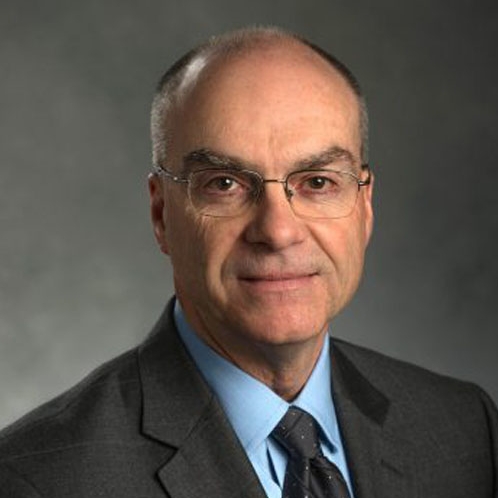
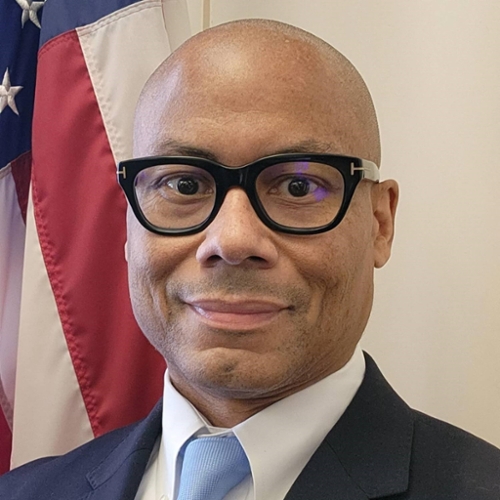
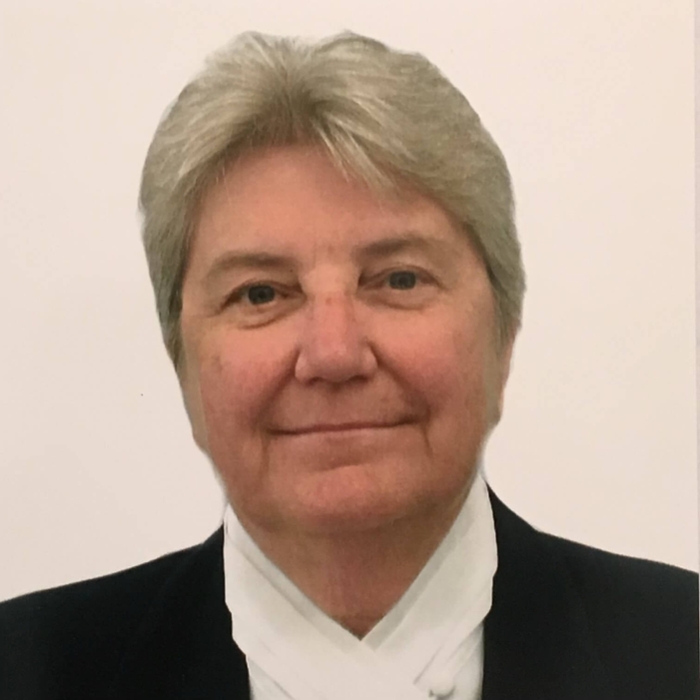
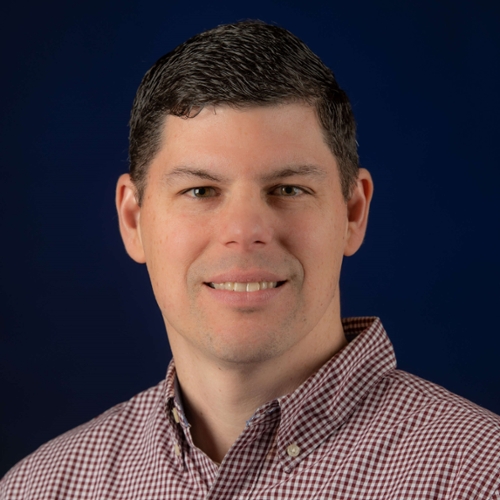




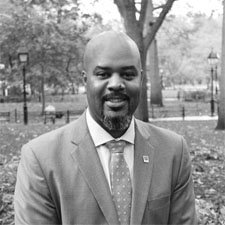
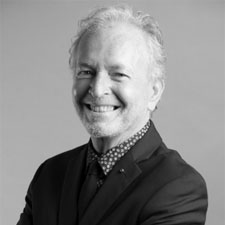


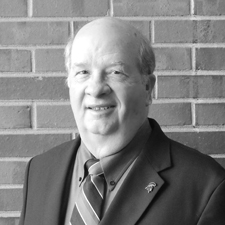

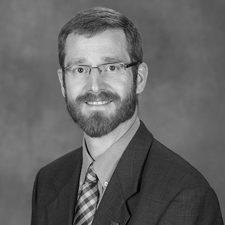

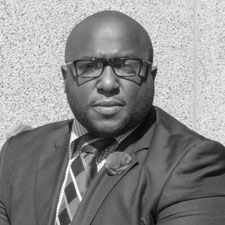

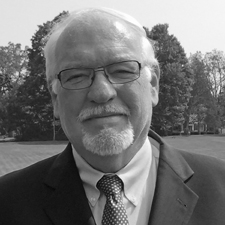
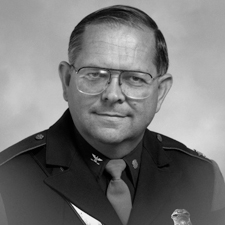
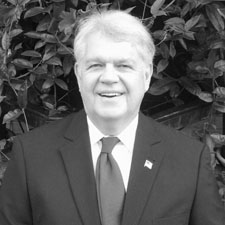




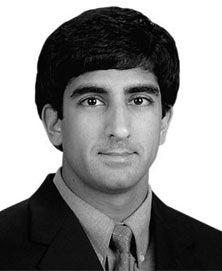
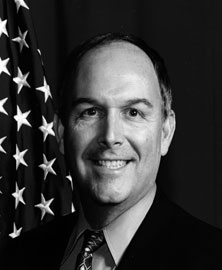
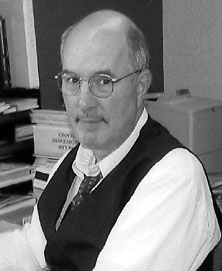

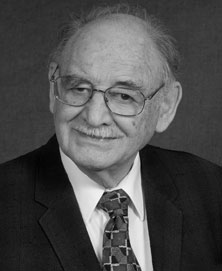




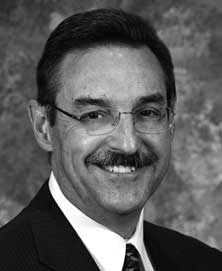
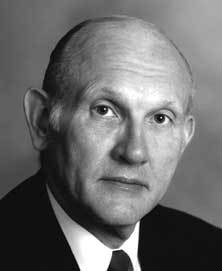
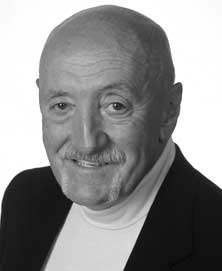
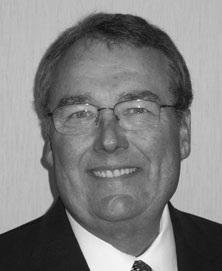



 Ellen Cokinos