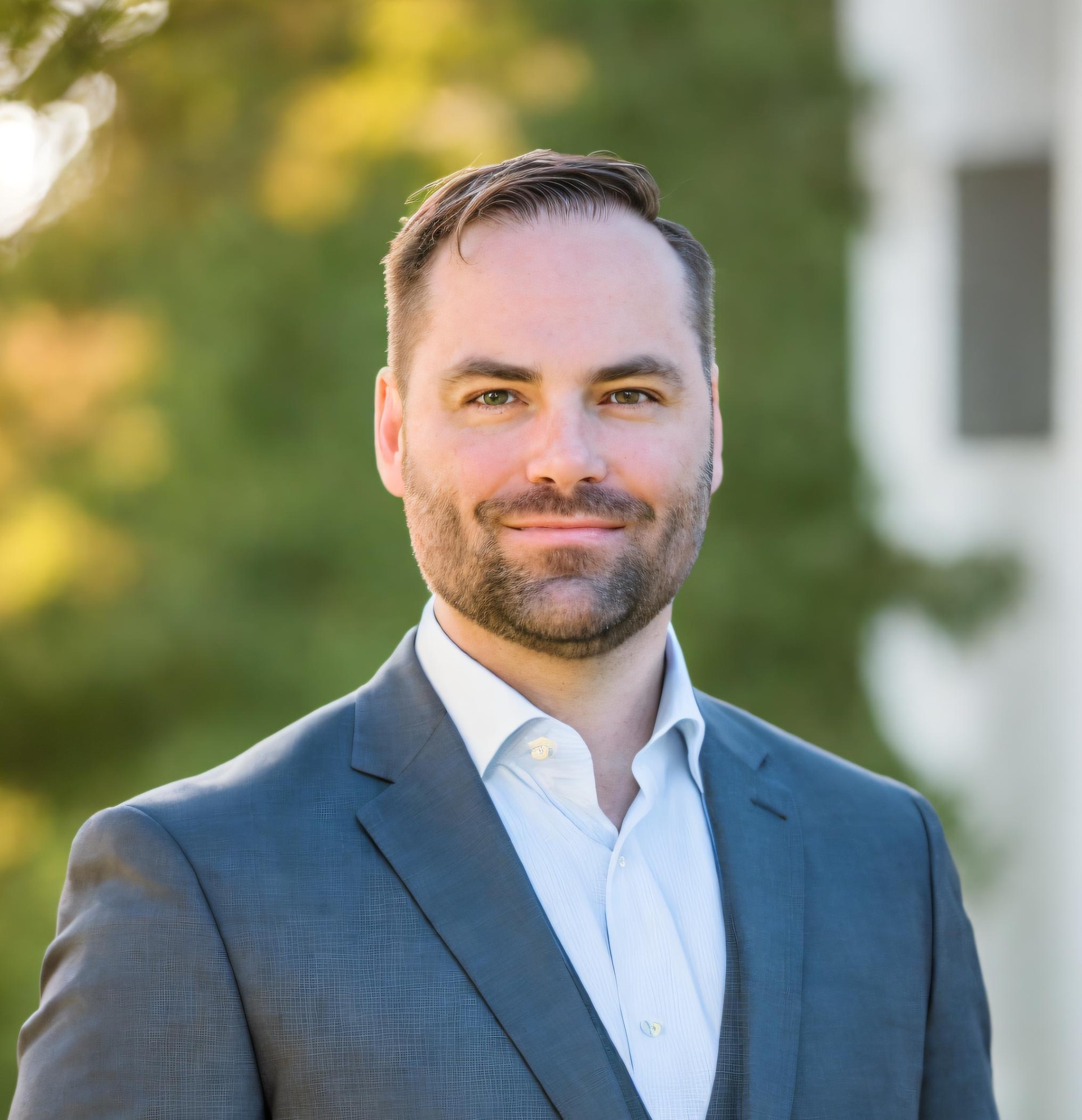
Daniel Young is the founder and Chief Innovation Officer of Circadian Risk, a two-time graduate of the Michigan State University School of Criminal Justice, and a 2025 inductee into the school’s Wall of Fame.
Throughout his career, Young built a reputation not simply as a security professional, but as a challenger of convention—pushing organizations to redefine how they understand and manage risk.
That mindset was evident early. Growing up in Holly, Michigan, Young launched his first business at 16, building an umpire services company that recruited, trained, and managed officials for local baseball leagues. It was an early sign of a pattern that would define his career: identify inefficiencies, build systems, and improve outcomes.
At Michigan State University, Young initially pursued federal law enforcement before recognizing that his interests extended beyond traditional career paths. A pivotal moment came during a recruiting session with Guardsmark, when Young asked a simple question: “What is the ideal candidate you are looking for?” The question was so unexpected that the company created its first-ever internship for him. By graduation, Young had advanced into a full-time leadership role.
He would go on to lead large-scale security operations, managing more than 100 personnel, before expanding into public-sector leadership as a Regional Bioterrorism Coordinator for Michigan’s District 1 Regional Medical Response Coalition. There, he helped strengthen multi-agency preparedness across healthcare systems, public health, and emergency management—gaining firsthand insight into how organizations respond to complex, real-world threats.
But it was through these experiences that Young identified a fundamental gap in the industry:
Organizations were managing security activities—but not truly measuring risk.
This realization became the foundation for Circadian Risk.
As founder and Chief Innovation Officer, Young leads the development of a physical risk intelligence platform that helps organizations understand and reduce risk exposure across their locations—enabling them to compare sites, identify where exposure is highest, and prioritize mitigation with greater clarity and confidence. His work has challenged long-standing assumptions in the field, reshaping how organizations evaluate and act on risk.
Under his leadership, Circadian Risk has grown into a recognized innovator, supporting major enterprises and securing Series A funding while advancing a broader industry conversation about what it actually means to “manage risk.”
Beyond his company, Young has contributed to the evolution of modern risk methodologies through collaboration with organizations such as MITRE and the U.S. Department of Homeland Security, and as co-founder of Do1Thing, a nonprofit initiative focused on improving individual and community preparedness.
At the core of Young’s work is a consistent philosophy: ask better questions.
He credits Michigan State University with shaping that mindset. His graduate education challenged him not just to understand systems of security and liability, but also to critically examine them—asking why they exist, whether they are effective, and how they can be improved. Those questions continue to drive his work today.
Young extends this thinking through his podcast, Professor Risk: Thinking Like a Villain, where he explores risk through the lens of adversarial behavior—encouraging leaders to think differently about threats, vulnerabilities, and decision-making.
His advice to students reflects the same perspective: “It’s not about who you know; it’s about who knows you.” He encourages students to distinguish themselves not by following predefined paths, but by engaging deeply, building relationships, and taking ownership of their direction.
Today, Young’s impact extends beyond the organizations he has led. Through his work, he has helped shift the conversation in security from reactive practices to proactive, measurable risk intelligence—a transformation that continues to shape the future of the field.