Jump to HeaderJump to Main ContentJump to Footer
Michigan State University
School of Criminal Justice
  • Apply
  • Give
  • Directory
  • Contact Us

College of Social Science

School of Criminal Justice

  • Academics
    • Overview
    • Majors, Degrees and Programs
    • Undergraduate
    • Graduate
    • Advising
    • Scholarships
    • Careers & Internships
    • Student Resources
    hero-cold-case

    Cold Case Unit

    Learn More
  • |
  • Research
    • Overview
    • G.R.E.A.T. Follow-up Study
    • Research Labs
    • Police Research Lab
    • Funded Projects
    • Recent Publications
    2023-A-CAPP-6059

    Research Labs in Criminal Justice

    Learn More
  • |
  • Community
    • Overview
    • MSU Center for Cybercrime Investigation and Training
    • Police Staffing Observatory (PSO)
    • Michigan Justice Statistics Center
    • First Line Supervision Course
    • Interdisciplinary Conference on Cybercrime
    • School of Staff and Command
    cyber-center-logo-webfile

    MSU Center for Cybercrime Investigation and Training

    Learn More
  • |
  • News
  • |
  • Events
  • |
  • Alumni
    • Overview
    • Giving
    • Update Your Information
    • Store
    • Public Safety Memorial
    • Tournament of Friendship
    • Wall of Fame
    hoodie

    Shop Criminal Justice Merchandise

    View Store
  • |
  • About
    • Overview
    • Directory
    • Strategic Plan
    • Store
    • Employee Information
    • Contact Us
    CJ_Cybercrime_training_II-8487

    Meet the faculty & staff in the School of Criminal Justice

    View Directory
School of Criminal Justice

College of Social Science

  • Academics
  • Research
  • Community
  • News
  • Events
  • Alumni
  • About

< Academics

  • Overview
  • Majors, Degrees and Programs
  • Undergraduate
  • Graduate
  • Advising
  • Scholarships
  • Careers & Internships
  • Student Resources
hero-cold-case

Cold Case Unit

Learn More

< Research

  • Overview
  • G.R.E.A.T. Follow-up Study
  • Research Labs
  • Police Research Lab
  • Funded Projects
  • Recent Publications
2023-A-CAPP-6059

Research Labs in Criminal Justice

Learn More

< Community

  • Overview
  • MSU Center for Cybercrime Investigation and Training
  • Police Staffing Observatory (PSO)
  • Michigan Justice Statistics Center
  • First Line Supervision Course
  • Interdisciplinary Conference on Cybercrime
  • School of Staff and Command
cyber-center-logo-webfile

MSU Center for Cybercrime Investigation and Training

Learn More

< News

< Events

< Alumni

  • Overview
  • Giving
  • Update Your Information
  • Store
  • Public Safety Memorial
  • Tournament of Friendship
  • Wall of Fame
hoodie

Shop Criminal Justice Merchandise

View Store

< About

  • Overview
  • Directory
  • Strategic Plan
  • Store
  • Employee Information
  • Contact Us
CJ_Cybercrime_training_II-8487

Meet the faculty & staff in the School of Criminal Justice

View Directory
  • Apply
  • Give
  • Directory
  • Contact Us

Academics

  • Majors, Degrees & Programs
  • Advising
  • Scholarships
  • Careers & Internships
  • Study Abroad & Study Away
  • Get Involved
  • Student Resources
  • Honors Option
  • Cold Case Unit
  • Undergraduate FAQ
  • Graduate FAQ

NEWS & EVENTS

  • News
  • Events

About

  • Directory
  • Strategic Plan
  • Current Employee Information
  • Store
  • Contact

Alumni

  • Giving
  • Wall of Fame
  • Public Safety Memorial
  • Update Your Information
  • Tournament of Friendship

Community

  • MSU Center for Cybercrime Investigation and Training
  • School of Staff and Command
  • First Line Supervision Course
  • Michigan Justice Statistics Center
  • Police Staffing Observatory
  • Interdisciplinary Conference on Cybercrime

Research

  • G.R.E.A.T. Follow-up Study
  • Police Research Lab
  • Research Labs
  • Funded Projects
  • Recent Publications

Contact us

cj@msu.edu

Address

Baker Hall, Rm #557 655 Auditorium Rd East Lansing, MI 48824

Follow Us

  • Visit our Facebook page
  • Visit our page on X
  • Visit our Instagram page
  • Visit our LinkedIn page
  • Visit our YouTube page

If you're having accessibility issues, please let us know.

Know MoreTransparency Reporting: Budget & Salary/Compensation
  • Contact Information|
  • Site Map|
  • Privacy Statement|
  • Site Accessibility|
  • Call MSU: (517) 355-1855|
  • Visit: msu.edu|
  • Notice of Nondiscrimination|

SPARTANS WILL|© Michigan State University|

Aug. 18, 2025

Criminal Justice Student Working To Reduce Early Adulthood Criminal Offenses

Quincy Zhou

zhou-quincy-1

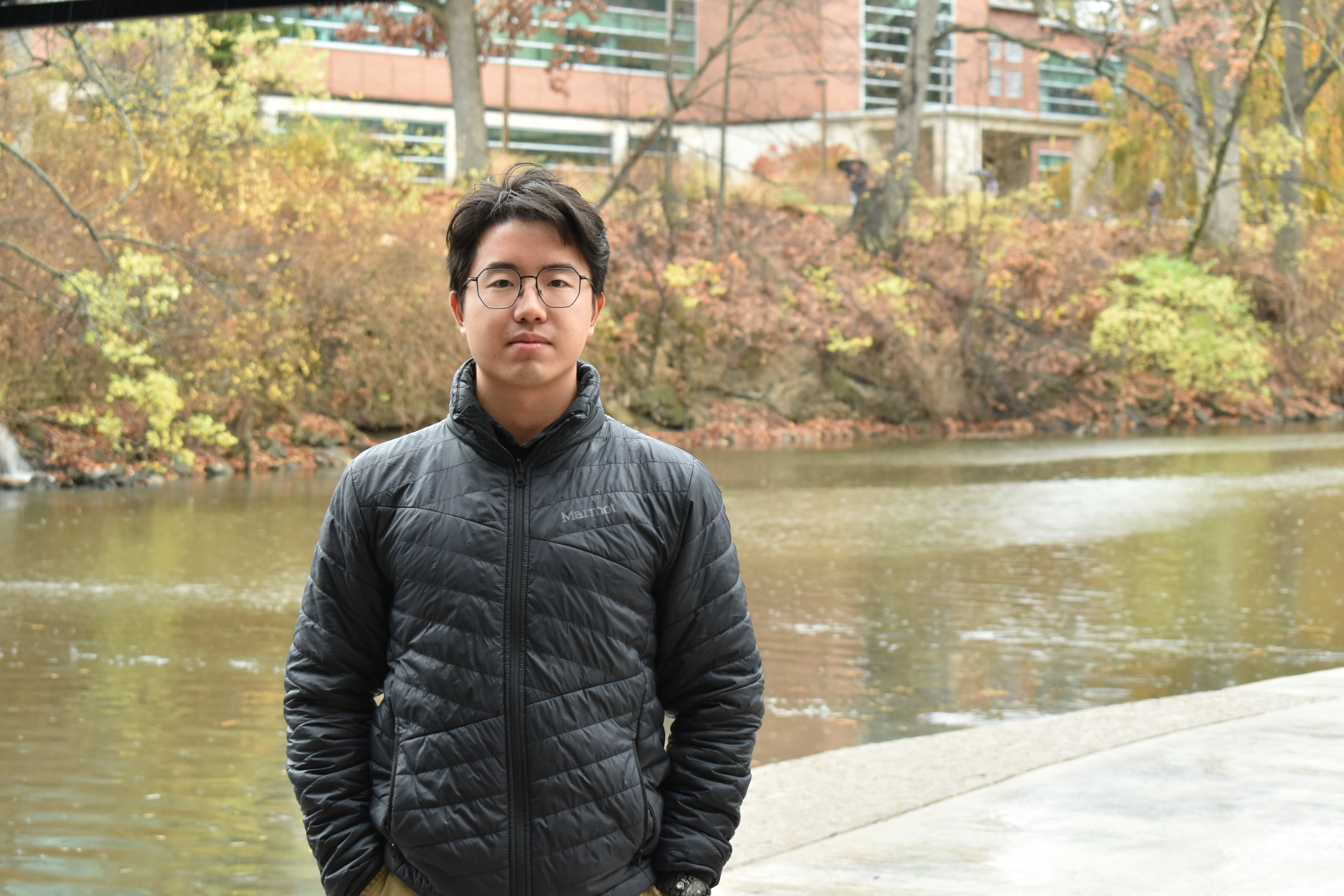
Quincy (Qinsi) Zhou is a senior at Michigan State University studying Criminal Justice with a minor in Peace and Justice Studies. Quincy partnered with Drs. Chris Melde and Steven Chermak (Professors in the School of Criminal Justice) on this University Undergraduate Research and Arts Forum research project.

For my UURAF project, I partnered with Dr. Chris Melde and Dr. Steven Chermak on the Gang Resistance Education and Training (G.R.E.A.T.) Follow-up study. My goal was to examine the impact of gang membership and having delinquent peers on early adulthood criminal offenses. Our findings would suggest whether further investment and development of early intervention programs was warranted.

My study utilized data obtained from the G.R.E.A.T. Follow-Up Study. The baseline measurements used were collected between 2006 and 2011, when the original G.R.E.A.T. Program ran. Roughly 4,000 adolescents between the ages of 11 and 14, from seven cities across the United States, participated in the program. Among the students surveyed during the original G.R.E.A.T. program, 13.4% self-reported to be a gang member, and 23.6% self-reported to have delinquent peers but no gang membership.

The data collected through the G.R.E.A.T. Follow-Up Study has shown that youths who self-reported gang membership were more likely to commit crimes in early adulthood compared to individuals who reported having delinquent peers but not being a member of a gang. Both categories of youths were more likely to commit crimes as young adults compared to individuals who were not exposed to either adolescent risk factor.

We used a logistic regression model to eliminate the impact that sex, race/ethnicity, and age may have on the data. It was very clear that gang membership and having delinquent peers increased the chance of an individual committing crimes in young adulthood. For example, youths who reported gang membership were approximately 200% more likely to have committed a violent crime in young adulthood compared to youths who were not members of gangs. Youths who reported having delinquent peers were roughly 100% more likely to commit a violent crime in young adulthood compared to their peers who did not report having delinquent friends.

We concluded that the impact of these two adolescent risk factors (youth gang involvement and having delinquent peers) is significant. Therefore, early intervention programs such as therapy, home visits, and other juvenile-related assistance efforts should be further invested in and developed to lower the likelihood of potential future criminal conduct of youths.